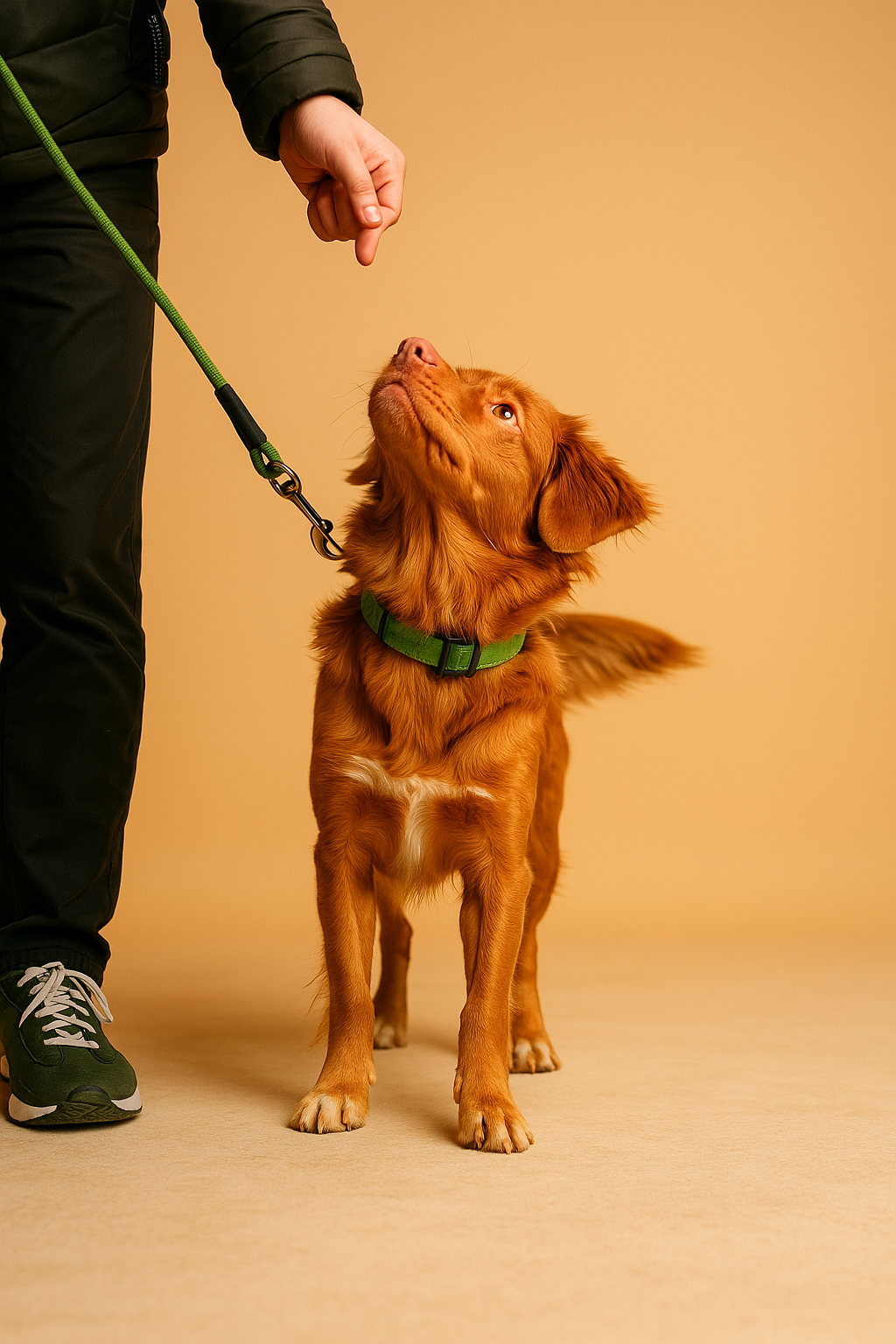
Treat the meet-and-greet like a structured screening, not a social intro. The goal is to verify fit under low pressure before you trust someone with unsupervised care.
A polished profile can hide mismatches in handling style, communication, or environment. A 20-30 minute live meeting usually reveals those gaps quickly if you know what to look for.

20-Minute Meet-and-Greet Scorecard
| Check | Pass Standard | Fail Signal |
|---|---|---|
| First approach | Provider lets dog choose pace and space | Forces contact or over-handles immediately |
| Dog response arc | Dog becomes looser and more curious over time | Stress signals stay high or escalate |
| Question quality | Asks about routine, triggers, meds, and emergency contacts | Asks mostly logistics and price |
| Safety planning | Can explain emergency and communication protocol | Vague "we'll handle it" language |
| Decision close | Clear trial/no-trial next step | Pressure to book on the spot |
Why Does the Meet-and-Greet Matter So Much?
Think about what you're hiring a pet care provider to do:
- Walker: Enter your home alone, leash your dog, and navigate the outside world together
- Boarding host: Take your dog into their home for days at a time while you're unreachable
- Daycare host: Supervise your dog in a group environment for hours
In each scenario, you're trusting someone with your dog's safety, comfort, and wellbeing—often without you present.
A profile tells you what someone says they can do. A meet-and-greet shows you what they actually do when face-to-face with your dog. The gap between those two things is where problems hide.
What the meet-and-greet reveals:
- How the provider interacts with dogs in real time—do they read body language or bulldoze through it?
- Whether your dog is comfortable with this person—discomfort now predicts stress during actual care
- The provider's communication style and professionalism—vague answers mean vague protocols
- Their home or environment (for boarding/daycare)—chaotic spaces produce chaotic stays
- Whether the "vibe" is right—intuition picks up signals your conscious mind misses
What profiles and reviews can't tell you:
- How they'll handle your specific dog's quirks—generic experience doesn't transfer to your dog's specific fears
- Whether their energy matches your dog's needs—a high-energy provider will overwhelm an anxious senior
- What your gut says when you meet them—and your gut will be right more often than you expect
When Meet-and-Greets Should Happen
| Service Type | Meet-and-Greet Location | Purpose | What You'll Miss If You Skip This |
|---|---|---|---|
| Dog walking | Your home | Provider sees where they'll enter; dog meets them on home turf | Walker won't know your dog's door-dashing habit or leash storage location |
| Boarding | Host's home | You assess their environment; dog explores where they'll stay | You won't see the broken fence or aggressive resident dog |
| Home daycare | Host's home | Same as boarding | Same risks as boarding |
| Facility daycare | The facility | Tour the space; observe operations | You won't see overcrowding, staff ratios, or escape-prone gates |
Timing: Schedule meet-and-greets at least 1-2 weeks before you need care. Waiting until the last minute forces you to accept whoever's available, not whoever's right. This buffer gives you time to:
- Process your impressions—first instincts often clarify overnight
- Schedule trial experiences if desired—one walk or one overnight before committing
- Find alternatives if the fit isn't right—better to know now than mid-trip
- Avoid desperate, last-minute decisions—desperation accepts red flags
What to Expect: The Flow of a Meet-and-Greet
For Walking Services (At Your Home)
Duration: 15-20 minutes
Typical flow:
Introductions (2 minutes)
- Walker arrives at your home
- Brief human-to-human greeting
- Initial dog introduction (let your dog approach on their terms)
Dog interaction observation (5-10 minutes)
- Watch how the walker approaches your dog
- See if your dog warms up or stays hesitant
- Note the walker's body language and patience level
Discussion (5-10 minutes)
- Share your dog's personality, quirks, and needs
- Discuss walking preferences (routes, pace, sniff time)
- Ask your questions (see list below)
- Cover logistics: schedule, home access, communication
Wrap-up (2 minutes)
- Confirm next steps
- Exchange any remaining information
For Boarding/Daycare (At Host's Home or Facility)
Duration: 20-30 minutes
Typical flow:
Arrival and tour (5-10 minutes)
- See where your dog will sleep, eat, and hang out
- Note cleanliness, safety, fencing, potential hazards
- If other pets are present, observe them from a distance first
Controlled introduction to host (5 minutes)
- Let your dog meet the host in a neutral area
- Watch body language on both sides
If applicable: introduction to host's pets (5-10 minutes)
- Only if the host has resident dogs and your dog is social
- On-leash first; assess compatibility
- Your dog doesn't need to be best friends—just comfortable
Discussion (5-10 minutes)
- Share your dog's routine, medical needs, behavioral quirks
- Ask about their daily schedule for boarding dogs
- Discuss emergency procedures
- Cover logistics: drop-off times, communication expectations, cost
What to Observe (Beyond Small Talk)
How They Approach Your Dog
The first interaction reveals a lot:
| Green Flag | Red Flag | Why This Predicts Future Behavior |
|---|---|---|
| Lets your dog approach first | Rushes in, forces interaction | Dogs who feel cornered escalate to defensive behavior—a provider who forces interaction now will trigger fear responses during real care |
| Gets down to dog's level (squats, kneels) | Towers over your dog | Towering is perceived as dominance/threat in dog body language; if they don't know this basic signal, they'll misread your dog constantly |
| Offers hand for sniffing, waits for interest | Reaches for head or body immediately | Reaching for the head triggers defensive responses in most dogs; this reveals whether they've learned basic handling or are winging it |
| Speaks calmly, softly | High-energy voice that amps your dog up | An amped-up dog is harder to control on walks and more likely to react to triggers |
| Respects if your dog is hesitant | Dismisses hesitation as "they'll warm up" | "They'll warm up" means "I'll ignore stress signals until they stop protesting"—this provider will miss your dog's distress during actual care |
Why this matters: Dogs read energy and body language instantly because their survival instincts evolved to detect threats before they escalate. A provider who understands dog communication will let your pup set the pace—which means your dog will settle into care faster. Someone who bulldozes in may have good intentions but lacks the skill to read canine signals, and that gap shows up as stress, refusal to eat, and behavioral problems during the stay.
Insider tests experienced providers use:
- The two-finger leash check: A skilled walker will gently pick up or handle the leash with two fingers to see if your dog has leash reactivity or sensitivity before clip-on.
- The toy interest test: Offering (not forcing) a toy to gauge your dog's playfulness and resource guarding potential.
- The treat introduction: Offering a treat with an open palm, watching whether your dog takes it gently or snaps—and asking you first about allergies or dietary restrictions.
- The "ask permission" approach: Skilled handlers ask "Can I pet them?" or "Are they okay with [X]?" before just doing it.
Their Questions to You
A good provider asks questions. A lot of them. They want to understand your dog before they're responsible for them.
Questions a skilled provider will ask:
| Category | Questions |
|---|---|
| Basics | Age, breed, health issues, medications |
| Behavior | How does your dog handle strangers? Other dogs? Loud noises? |
| Routine | Feeding schedule? Walk preferences? Sleep habits? |
| Triggers | What scares them? What excites them? Any resource guarding? |
| Medical | Allergies? Surgeries? Mobility limitations? |
| Preferences | Favorite activities? Comfort items? |
If a provider doesn't ask much: Either they don't think these things matter (which means they won't adjust their approach for your dog's specific needs), or they assume all dogs are the same (which means they'll use generic handling that fails for dogs with any quirks—and every dog has quirks). Both scenarios lead to the same outcome: your dog's needs get overlooked.
Their Environment (For Boarding/Daycare)
Look around. You're assessing where your dog will spend potentially days of their life.
| What to Check | Why | What Goes Wrong If You Ignore This |
|---|---|---|
| Cleanliness | General hygiene indicates care level | Dirty environments breed infections, parasites, and stress; your dog comes home sick or infested |
| Safety | Secure fencing? Gates? Toxic plants? Hazards? | Dogs escape through gaps, dig under fences, or ingest toxic plants—all preventable with proper setup |
| Sleeping area | Where will your dog rest? Comfortable? Clean? | Dogs who can't rest properly don't eat, stress-shed, and come home exhausted rather than refreshed |
| Feeding setup | Separate from other pets? Clean bowls? | Shared feeding areas trigger resource guarding fights; your dog may refuse to eat or get injured |
| Outdoor space | Secure? Escape-proof? Safe for your dog's size? | Small dogs can slip through fence gaps; large dogs can jump 4-foot fences |
| Other animals | How many? Temperament? Supervised appropriately? | Too many dogs per supervisor means fights get missed; an aggressive resident dog will bully yours |
Trust your instincts. If the space feels chaotic, overcrowded, dirty, or unsafe—listen to that. A provider can be lovely but have an unsuitable environment, and your dog will pay the price for the gap between their personality and their setup.
Questions to Ask (And What Answers Reveal)
For All Services
| Question | What You're Assessing | What a Bad Answer Looks Like |
|---|---|---|
| "How long have you been doing this professionally?" | Experience level | Vague answers or conflating pet ownership with professional care; "I've had dogs my whole life" isn't the same as handling client dogs |
| "Are you insured? Background-checked?" | Professionalism and accountability | Hesitation, defensiveness, or "I haven't gotten around to it"—if something goes wrong, you have no recourse |
| "Do you have any training certifications?" | Look for Fear Free Certified, CPDT-KA, KPA-CTP, or other recognized credentials | No certifications isn't disqualifying, but dismissing them as "unnecessary" suggests resistance to learning |
| "How do you handle emergencies?" | Preparedness and protocol | Vague answers like "I'd call you" or "I'd figure it out"—they should name a specific vet and describe their protocol |
| "What's your communication style?" | Will you hear from them or wonder? | "I'll let you know if something's wrong" means you'll spend the entire trip anxious; proactive updates matter |
| "Can you tell me about a difficult situation you've handled?" | Real-world problem-solving | If they can't recall one, they either lack experience or don't recognize problems when they happen |
| "What's your approach with anxious or reactive dogs?" | Even if your dog isn't, this reveals training knowledge | "I'm firm with them" or "I show them who's boss" indicates outdated dominance-based handling that escalates anxiety |
| "What makes you good at this?" | Passion vs. just a job | Generic answers like "I love dogs" don't reveal skill; look for specific examples of going above and beyond |
Certifications worth asking about:
- Fear Free Certified — trained to reduce fear, anxiety, and stress in pets
- CPDT-KA (Certified Professional Dog Trainer-Knowledge Assessed) — industry-standard professional certification
- KPA-CTP (Karen Pryor Academy Certified Training Partner) — positive reinforcement focused
- Pet First Aid certified — knows emergency response basics
For Dog Walking
| Question | What You're Assessing | What a Good vs. Bad Answer Reveals |
|---|---|---|
| "What does a typical walk look like for you?" | Style (power walk vs. sniff walk vs. enrichment walk) | Specific descriptions show intentionality; "we just walk" means no enrichment strategy |
| "How do you handle reactive dogs on walks?" | Listen for terms like threshold, creating distance, or Look at That game | Buzzword-free answers like "I pull them away" suggest force-based handling that worsens reactivity |
| "What's your protocol for off-leash dogs approaching?" | This happens constantly in Chicago—they need a plan | "I just deal with it" means no plan; your dog may end up in a fight or traumatized |
| "Do you walk dogs in groups or individually?" | Your preference may vary | Group walks save money but sacrifice attention; reactive or anxious dogs need solo walks |
| "What's your winter paw care routine?" | In Chicago, this matters—calcium chloride burns paw pads | "I've never thought about it" means your dog comes home with chemical burns and cracked pads |
| "What's your cancellation policy?" | Reliability expectations | Extremely strict policies suggest they view you as revenue, not a relationship |
| "How do you get into homes?" | Comfort with your access method | Resistance to lockboxes or smart locks may signal technology discomfort that creates scheduling friction |
Chicago-specific questions to add:
- "How do you handle high-rise elevator logistics?" (if applicable)
- "What routes do you typically use in [your neighborhood]?" (Do they know the area? Can they avoid trigger-heavy spots?)
- "What's your extreme weather policy?" (the lake wind, Polar Vortex days)
For Boarding/Daycare
| Question | What You're Assessing | Consequence of a Bad Answer |
|---|---|---|
| "How many dogs do you take at once?" | Capacity and attention per dog | More than 4-5 dogs per person means supervision gaps; your dog's needs get lost in the crowd |
| "Where do dogs sleep? Are they crated overnight?" | Your dog's sleeping preferences matter | A dog who's never been crated will panic all night; a dog who needs crating for safety won't get it |
| "How do you introduce new dogs to your resident pets?" | Safety protocol for multi-dog environments | "I just let them figure it out" leads to fights; controlled intros prevent injuries |
| "What happens if a dog doesn't fit in?" | Do they acknowledge this possibility? | Denial that incompatibility exists means they'll force a bad situation rather than call you |
| "How do you handle a dog who's anxious or not eating?" | Experience with stressed boarders | "They'll eat when they're hungry enough" ignores that anxious dogs can go days without eating |
| "What do you have for enrichment?" | Look for Kong, puzzle feeders, LickiMat, snuffle mats | Nothing beyond walks means your dog will be bored and under-stimulated, leading to anxiety |
| "What's your protocol for medical emergencies?" | Which vet do they use? How do they handle after-hours? | Vague answers mean delays during emergencies; minutes matter for conditions like bloat |
| "Can you administer medications?" | Specifics matter: pills, liquids, insulin injections | "I can try" isn't good enough for insulin; your dog may miss critical doses |
What to look for in their home (boarding):
- Adaptil diffusers or calming pheromone products — shows they think about anxiety
- Proper fencing (6 feet for jumpers, buried or reinforced for diggers)
- Separate feeding areas — prevents resource guarding conflicts
- Baby gates or x-pens — shows ability to manage multi-dog spaces
- Dog beds in multiple areas — dogs should have options, not one spot
Reading Your Dog's Body Language
The Stress Ladder
Dogs escalate through signal levels before reacting. Learn to read the early signs so you never need to see the late ones.
Comfortable
Good match signalYour dog perceives no threat. This is what you want to see during a meet-and-greet.
- Relaxed body, loose posture, soft eyes with normal blink rate
- Mid-height tail with loose wag — not stiff or tucked
- Approaches the provider voluntarily to sniff and engage
- Play bows, brings toys, or calmly ignores (no threat perceived)
Cautious
Give it 10–15 minMild uncertainty — normal for most dogs meeting strangers. Not a dealbreaker if it resolves.
- Cautious sniffing — investigating but keeping distance
- Lip licking or yawning — mild appeasement signals
- Staying close to you — social referencing their trusted human
- Brief avoidance — turns away, sniffs ground, then reapproaches
Distressed
Not the right matchYour dog is telling you something is wrong. These signals predict stress during actual care.
- Whale eye — whites of eyes visible in a crescent shape
- Tucked tail, cowering, or frozen stillness (freeze before fight/flight)
- Growling, snapping, or raised hackles (piloerection)
- Excessive panting, hiding, or desperate attempts to flee
Dogs escalate, not explode. Lip licking and avoidance come before growling and snapping. A good provider reads the early signals and backs off. A bad one pushes until the dog has no choice but to escalate — and then blames the dog for “being aggressive.”
Your dog can’t fake comfort. If they’re relaxed, that provider earned it. If they’re stressed, that’s data you can’t ignore.
Your dog can't tell you "I like this person" or "Something feels wrong." But they can show you—and their body language is more honest than any profile or interview answer. Dogs evolved to communicate through posture, movement, and subtle signals because their survival depended on it. Learn to read these signals, and your dog becomes your best advisor.
Positive Signs (Your Dog Is Comfortable)
| Signal | What It Looks Like | Why This Predicts Success |
|---|---|---|
| Relaxed body | Loose posture, not stiff or tense | A relaxed dog during intro will settle into care faster and experience less stress |
| Soft eyes | Normal blink rate, not staring or whale-eyed | Soft eyes indicate the dog perceives no threat; they'll eat and sleep normally during stays |
| Wagging tail (relaxed) | Mid-height, loose wag—not stiff or tucked | Relaxed wags signal genuine comfort, not the stiff "flag" wag of uncertainty |
| Approaching voluntarily | Choosing to sniff, engage, or stay near the provider | Voluntary approach means the dog is building their own comfort; forced proximity creates the opposite |
| Play invitations | Bowing, bringing toys, bouncy energy | Active engagement shows the dog sees the provider as a potential friend, not a threat to manage |
| Ignoring the provider | Ironically a good sign—means no threat perceived | Dogs don't ignore threats; ignoring someone means they've assessed and dismissed any danger |
Neutral Signs (Give It Time)
| Signal | What It Looks Like | What This Means |
|---|---|---|
| Cautious sniffing | Investigating but keeping distance | Dog is gathering information before committing—give them time, don't force closeness |
| Watching from afar | Not engaging but not fearful | Neutral assessment; many dogs do this with all strangers and warm up within 10-15 minutes |
| Staying close to you | Normal for new situations | Social referencing—dog is checking with their trusted human; not a problem unless it escalates |
| Brief avoidance | Turns away, sniffs elsewhere—might just need time | Self-soothing behavior; let them decompress rather than pursuing them |
Warning Signs (Something's Off)
| Signal | What It Looks Like | What It May Mean |
|---|---|---|
| Whale eye (half-moon eye) | Whites of eyes visible in a crescent shape | Stress or fear |
| Lip licking, yawning (without being tired) | Appeasement signals or calming signals | Mild anxiety; dog is trying to de-escalate |
| Tucked tail | Tail down or between legs | Fear |
| Cowering or hiding | Making self small, seeking escape | Serious discomfort |
| Growling, snapping, raised hackles (piloerection) | Defensive aggression | Perceived threat |
| Frozen stillness | Not moving, stiff body | High stress; about to react—this is a "freeze" before fight or flight |
| Excessive panting (when not hot/exercised) | Rapid breathing, stress panting | Anxiety escalating |
| Displacement behaviors | Sudden scratching, sniffing ground, shaking off | Dog is stressed and self-soothing |
The stress ladder: Dogs escalate through levels of stress signals before reacting—this is hardwired into canine behavior because aggression is metabolically expensive and risky. Lip licking, turning away, and yawning are early attempts to communicate "I'm uncomfortable; please give me space." A good provider recognizes these early signals and responds by backing off before the dog reaches growling or snapping. If a provider ignores these early signs or dismisses them as "nothing," they're forcing your dog to escalate to be heard—and eventually your dog learns that only aggression gets results. That's how behavioral problems develop.
What to do with warning signs:
If your dog shows mild stress signals (lip licking, brief avoidance), give them space and time. Some dogs are cautious with all new people and warm up within 10-15 minutes once they've assessed the situation. This is normal—not every dog is a social butterfly.
If your dog shows severe distress (cowering, growling, trying to flee) that doesn't resolve within the meeting, this is likely not the right match—even if the provider is perfectly nice. The reason doesn't matter; what matters is that your dog will spend the entire stay in that same stressed state. Some dogs have trauma histories, some have instinctive discomfort with certain energies, some pick up on things we can't perceive. Whatever the cause, the outcome is the same: this provider will mean stress for this dog.
Your dog's opinion matters. They can't explain why they're uncomfortable, but their discomfort is real. Ignoring it means sending your dog into a situation they've already told you they don't want to be in—and they'll remember that you didn't listen.
Red Flags That Should End the Meeting
Some things are dealbreakers. These aren't "yellow flags" to monitor—they're exit signals.
Provider dismisses your concerns "Oh, all dogs do that. They'll be fine." — A provider who dismisses your concerns now will dismiss your dog's distress later. They've just told you they won't take problems seriously.
Provider can't answer basic questions No emergency plan? No answer about insurance? Walk away. If they haven't thought through emergencies before they happen, they'll improvise during a crisis—and your dog pays for that improvisation.
Provider forces interaction your dog resists Grabbing your dog when they try to retreat. Ignoring fear signals. This reveals two things: they can't read dog body language, and they prioritize their agenda over your dog's comfort. Both will cause problems during real care.
Chaotic or unsafe environment Aggressive resident dogs, broken fencing, obviously unsanitary conditions. The environment won't improve when you leave. What you see now is what your dog gets.
Provider badmouths other clients or pets Professionalism matters. If they talk about other clients negatively to you, they'll talk about you negatively to others—and more importantly, their judgment of "problem" dogs may land on yours.
Your gut says no Don't talk yourself out of instincts. Your subconscious processes information your conscious mind hasn't articulated yet. If something feels wrong, honor that—you'll spend your entire trip second-guessing if you don't.
After the Meet-and-Greet: Making the Decision
Questions to Ask Yourself
After you leave (or after the walker leaves), give yourself 24 hours before booking. First impressions clarify overnight, and the pressure of the moment fades.
| Question | Why It Matters | What It Tells You |
|---|---|---|
| How did my dog behave during and after? | Dogs show stress—or comfort—clearly | If your dog was exhausted or off after just 20 minutes, imagine a multi-day stay |
| Did I feel comfortable leaving my dog with this person? | Your peace of mind matters | You'll check your phone constantly if you have doubts; that anxiety affects your trip |
| Did they ask good questions? Listen well? | Indicates how attentive they'll be | Providers who don't listen in the meeting won't read your care instructions carefully |
| Were there any red flags or gut feelings I dismissed? | Don't rationalize away concerns | "I'm sure it will be fine" is what people say before it isn't fine |
| Can I see a real relationship forming here? | Long-term fit matters for consistency | Dogs thrive with consistent providers; finding the right match now saves future searching |
The Trial Run (Optional but Recommended)
Before committing to regular service or a long boarding stay, consider a trial:
| Service | Trial Option | Why This Matters |
|---|---|---|
| Walking | Book 2-3 walks before committing to recurring | You'll see if the walker follows your instructions and if your dog seems happy post-walk |
| Boarding | Schedule one overnight before a longer trip | One night reveals whether your dog can settle enough to eat and sleep; if they can't, you know before a week-long trip |
| Daycare | Start with half-days before full days | Half-days let your dog decompress at home; dogs who handle half-days may still be overwhelmed by full days |
Trials let you see how your dog actually does—not in a 20-minute meeting, but in the real situation. The meet-and-greet shows compatibility; the trial reveals sustainability. Some dogs do great in short interactions but can't maintain that over hours or days. Better to discover that during a trial than during your vacation.
Why Tails Meet-and-Greets Work
On Tails, meet-and-greets aren't optional—they're built into the process. Here's what that means for you:
We require them because skipping them creates problems: You can't know if a provider is right for your dog until you meet. Period. No amount of profile reading replaces seeing how they actually interact with your dog. Platforms that make meet-and-greets optional see higher cancellation rates and complaints—because people book based on profiles and discover incompatibility too late.
Free, always: Meet-and-greets on Tails don't cost you anything. We want you to meet providers without financial pressure—and to meet multiple if needed. Paying for meet-and-greets creates incentive to book even when the fit isn't right; free removes that pressure.
Matched before you meet: Unlike directories where you schedule meet-and-greets hoping for the best, Tails matches you with providers pre-selected for your dog's needs. By the time you meet, we've already filtered for relevant experience—so you're choosing between qualified options, not screening out unqualified ones.
Backup if it doesn't click: If a meet-and-greet doesn't go well, we help you find another match. No hard feelings, no starting over. A bad meet-and-greet isn't a failure—it's the system working as designed, screening out poor fits before your dog experiences them.
Schedule a Free Meet-and-Greet on Tails
The Bottom Line
The meet-and-greet is your moment of truth. It's where profile claims become observed reality—where "experienced with anxious dogs" either shows up in how they handle your nervous pup or doesn't. It's where your dog's opinion enters the equation, and unlike profiles and reviews, your dog's body language can't be faked or curated.
This is hard—and it's also worth doing right. Twenty minutes of careful observation now prevents days of worry later. Ask the uncomfortable questions. Watch your dog more than you watch the provider. Trust your gut even when you can't articulate why.
The right provider will feel like relief—like you can actually enjoy your trip instead of checking your phone every hour. The wrong one will nag at you, and that nagging feeling is data.
Your dog deserves care from someone who truly fits them. Not just someone available, not just someone affordable—someone whose energy, environment, and expertise match what your dog needs. The meet-and-greet is how you find that person, and skipping it means betting your dog's wellbeing on luck instead of evidence.
Frequently Asked Questions
How long should a meet-and-greet take?
Plan for 15-30 minutes. Walking meet-and-greets are typically shorter (15-20 minutes) since they happen at your home and focus on the dog-provider interaction. Boarding and daycare meet-and-greets take longer (20-30 minutes) because you're also touring the provider's space and assessing the environment. Rushing through a meet-and-greet defeats its purpose—a 5-minute meet-and-greet won't reveal whether your dog actually warms up or just tolerates the introduction. Take the time to observe and ask questions, even if it feels awkward.
What if my dog is nervous with all strangers?
That's actually valuable information—for both you and the provider. Tell them upfront that your dog is anxious with new people, and watch how they respond. A good provider will slow down, give space, use indirect body language, and not take the hesitation personally. Their response to this information reveals their experience with anxious dogs. If they say "no problem, they'll warm up to me" and then immediately approach your dog anyway, they've just shown you they don't actually know how to handle anxious dogs. Your dog's nervousness may ease with time (10-15 minutes is reasonable to wait), or the sustained anxiety may indicate this provider isn't the calm, patient presence your anxious dog needs.
Should I bring treats for the provider to give my dog?
You can, but ask the provider first. Some experienced providers prefer to build relationships without food—because treats can mask discomfort rather than build genuine comfort. A dog who takes treats from someone they're scared of isn't becoming less scared; they're just food-motivated enough to override their fear temporarily. If your dog is highly food-motivated, treats might help the initial ice-breaking—but watch whether your dog stays relaxed after the treat is gone. A good provider should be able to connect without relying on food. Always mention food allergies and dietary restrictions before any treats are offered.
What if the meet-and-greet goes fine but my gut feels unsure?
Honor that uncertainty. Your gut processes information your conscious mind hasn't articulated yet—maybe the provider's energy was slightly off, or their answers were technically correct but felt rehearsed. It's okay to say "I need a day to think about it" before booking. Sometimes concerns clarify overnight; sometimes you realize the hesitation was just general nerves about using pet care for the first time. But if the uneasy feeling persists after sleeping on it, look for other options. Forcing a relationship you're not confident in means spending your entire trip wondering if you made the wrong choice.
Can I meet multiple providers before deciding?
Absolutely—and you should, especially for boarding stays or if your dog has specific needs. On Tails, you can schedule meet-and-greets with several matched providers before committing. Meeting multiple providers gives you comparison data: you'll notice who asked better questions, who your dog responded to more positively, and whose environment felt safest. There's no pressure to book with the first person you meet, and the first person you meet isn't always the best fit even if they seem "good enough."
What if the provider's resident dogs and my dog don't get along?
This is exactly why meet-and-greets exist. If the introduction with resident pets doesn't go well, it's far better to know now than during a week-long boarding stay. Some friction is normal—dogs need time to establish relationships, and initial stiffness often resolves within 10-15 minutes as dogs negotiate space. But outright incompatibility—sustained growling, snapping, fear that doesn't resolve, one dog bullying the other—means this isn't the right environment for your dog. A good provider will acknowledge this honestly rather than insisting "they'll work it out." Dogs who don't get along don't magically become friends; they either avoid each other (stressful) or fight (dangerous).
Does a successful meet-and-greet guarantee successful care?
Not guarantee, but strongly predict. The meet-and-greet shows initial compatibility—your dog doesn't perceive this person as a threat, the provider knows how to read basic dog body language, and the environment is safe. Real success comes from ongoing care, communication, and adjustment. That's why trial runs (one walk, one overnight) are valuable—they test the relationship under real conditions, not just introduction conditions. A dog who does well in a 20-minute meeting may still struggle with multi-day separation anxiety. But a dog who does poorly in the meet-and-greet will almost certainly do poorly during actual care, so the meet-and-greet is a reliable filter even if it's not a complete predictor.