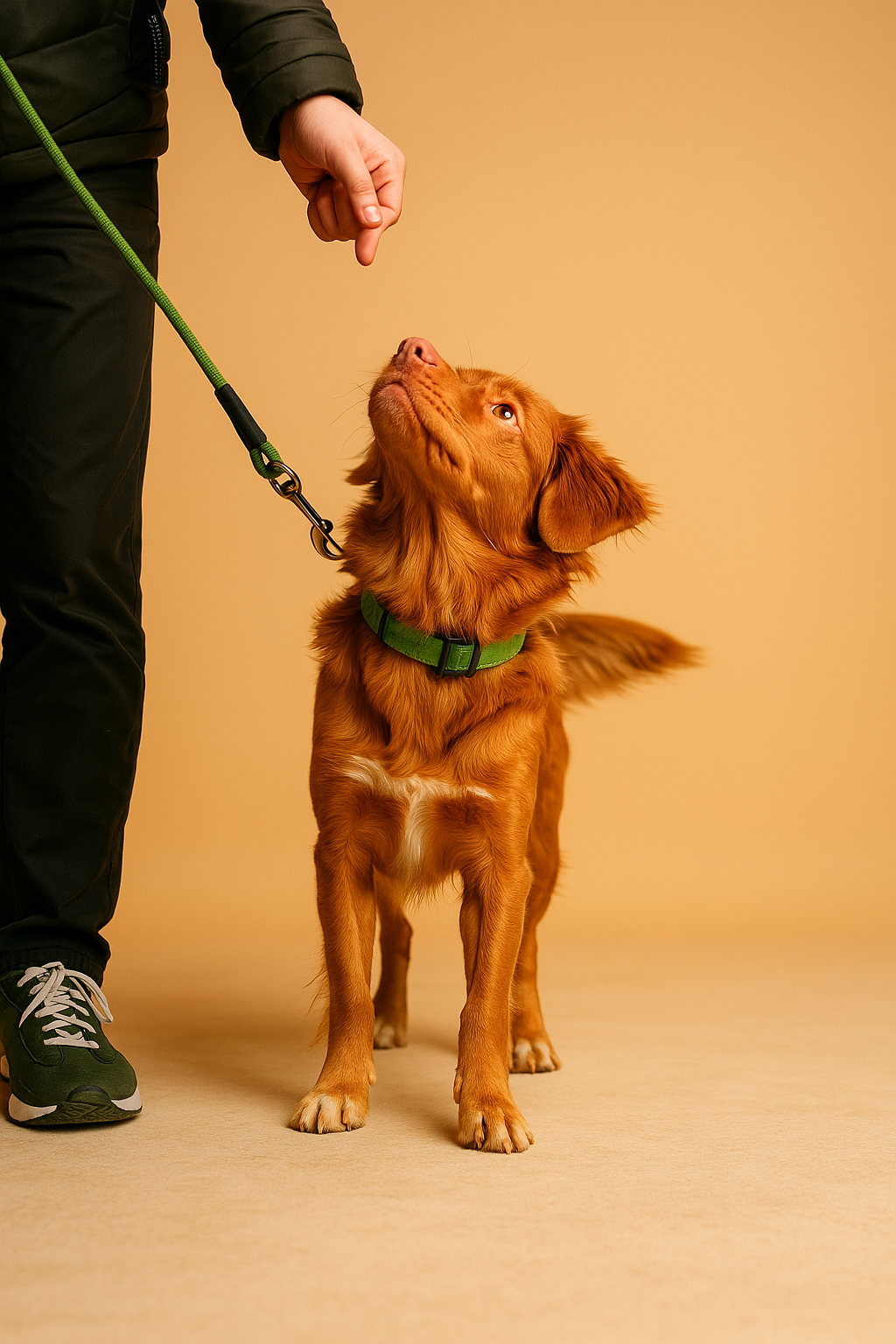
Untrained walkers miss early signs of heat stroke, chase loose dogs (which triggers prey drive and makes them run faster), and flood reactive dogs instead of managing threshold distance. Well-meaning people make mistakes that hurt dogs—the right questions expose who's prepared for emergencies and who'll panic when your dog needs decisive action.
Here are the 10 questions that matter, and what to listen for in the answers.

What Should You Ask a Dog Walker Before Hiring Them?
1. "How long have you been walking dogs professionally, and what's your background?"
Why it matters: Experience isn't everything, but it's the difference between someone who's handled an emergency and someone who will face their first crisis with your dog. A walker with years of experience has likely encountered reactive dogs, sudden health issues, and escape attempts—and developed muscle memory for handling them. Background matters because protocols must be learned: someone who trained at a reputable company knows the two-finger collar check; someone who started solo may not discover loose collars until a dog slips free.
What to listen for:
- Specific timeframes ("I've been doing this professionally for three years, full-time for two")
- Professional context ("I started at a dog walking company, got my CPDT-KA certification, then went independent" or "I worked at a vet clinic for two years before transitioning to walking")
- Continuing education ("I completed Fear Free certification last year" or "I take Karen Pryor Academy webinars")
- Acknowledgment of learning curve ("My first year, I made mistakes—I learned to never use retractable leashes after one incident")
Red flag: Vague answers like "I've always loved dogs" or "I've been around dogs my whole life." Loving dogs and professionally walking them are different skill sets. Also watch for defensive responses ("Why does that matter?")—professionals are proud of their experience.
2. "What types of dogs have you worked with? Have you handled dogs like mine?"
Why it matters: Dogs are not interchangeable, and treating them as such gets dogs hurt. A walker who's only handled calm, small dogs cannot physically control your 80-pound Lab who pulls like a sled dog—they'll lose grip, drop the leash, or get dragged into traffic. Breed-specific knowledge prevents harm: a brachycephalic breed (Bulldog, Pug) can overheat and collapse at 75°F because their shortened airways cannot efficiently cool their bodies; a sighthound (Greyhound, Whippet) will chase a squirrel into traffic because prey drive overrides recall. Someone who's walked 50 Golden Retrievers has no framework for these scenarios.
What to listen for:
- Range of breeds and sizes with specific examples ("I regularly walk everything from Chihuahuas to Great Danes. I have three clients with Pit mixes who are strong pullers.")
- Experience with your dog's specific breed or type ("I've worked with several Huskies—they need mental stimulation, not just distance")
- Understanding of breed-specific needs ("I know brachycephalic breeds like Bulldogs and Pugs need shorter walks and constant overheating monitoring—I carry a Gulpy water bottle and know the signs of heat stroke")
- Behavioral complexity ("I've handled leash-reactive dogs, fearful dogs, and dogs with resource guarding. Each requires different approaches.")
Red flag: "I can handle any dog" without specifics. Confidence is good; overconfidence without evidence is concerning. Also concerning: someone who's never encountered challenging behaviors but claims to be experienced.
3. "Have you dealt with leash-reactive dogs? Walk me through how you handle reactivity."
Why it matters: Even if your dog isn't reactive, they'll encounter reactive dogs on walks—and mishandling those encounters creates reactivity. In Chicago specifically, crowded sidewalks on Division Street, Milwaukee Ave, and around Wicker Park force constant dog encounters within 10 feet. If a walker doesn't cross the street early enough, your non-reactive dog gets lunged at repeatedly, and dogs who get lunged at start anticipating threats—this is how reactivity develops. If your dog IS reactive, this question is make-or-break: improper handling (holding tight while they panic) makes reactivity worse through a process called flooding, where the dog learns that triggers lead to inescapable stress.
What to listen for:
- Specific techniques with names ("I use threshold training—keeping enough distance that the dog can still think, usually 20+ feet for moderate reactivity")
- Proactive management ("I cross the street early when I see a trigger approaching—before my dog notices, not after")
- Understanding of trigger stacking ("I know three small stressors can add up. If we've had a loud truck and a skateboarder, I shorten the walk")
- Familiarity with tools: front-clip harnesses (Freedom, Balance), head halters (Gentle Leader, Halti), treat pouches for rapid reward delivery
- Named protocols ("I use the 'Look at That' game for counter-conditioning—rewarding calm acknowledgment of triggers")
- Acknowledgment that reactivity is managed, not cured ("Reactivity management is ongoing. I don't promise to 'fix' a dog—I manage their environment to keep them under threshold.")
Red flag: "I just hold the leash tight and wait for them to calm down." That's called flooding, and it makes reactivity worse. Also concerning: "I've never had a dog react on me"—either they're lying, inexperienced, or don't recognize the early warning signs.
4. "What's your emergency protocol if something goes wrong?"
Why it matters: Emergencies require immediate action, and hesitation costs dogs their lives. GDV (gastric dilatation-volvulus) kills dogs within hours if untreated—a walker who doesn't recognize the symptoms (bloating, retching without producing anything, restlessness) and waits for your callback may wait too long. Dogs who eat xylitol gum can have fatal blood sugar drops within 30 minutes. This question reveals whether someone has rehearsed these scenarios mentally—people who haven't thought through emergencies will freeze, and frozen seconds become permanent consequences.
What to listen for:
- A clear chain of actions with priorities ("First I secure the scene and prevent further injury. Then I assess—is this bleeding I can manage, or do we need emergency care immediately? I call you while I'm already heading to the vet if it's serious.")
- Specific Chicago emergency vet locations ("I know MedVet Chicago in Lincoln Park is 24/7. For the West Loop, I'd go to Chicago Veterinary Emergency Services. I have addresses saved in my phone.")
- Transportation plan ("I drive and always have my car nearby, so I can get to an emergency vet within 15 minutes from most of my walking areas")
- Decision-making framework ("For non-emergencies—minor cuts, bee stings, an upset stomach—I contact you first. For true emergencies—GDV symptoms (bloating, retching without producing anything), severe bleeding, seizures, collapse—I act immediately and call you on the way. GDV can be fatal within hours; I'm not waiting for a callback.")
- Poison protocol ("If a dog eats something toxic—chocolate, xylitol gum, rat poison bait—I call ASPCA Poison Control (888-426-4435) immediately for guidance while heading to the emergency vet")
Red flag: Hesitation, vague answers like "I'd figure it out," or "that's never happened to me." Emergencies happen to everyone eventually. "I'd call you first no matter what" is also concerning—in a true emergency, seconds matter.
5. "How many dogs do you walk at once, and how do you decide which dogs can walk together?"
Why it matters: Group size directly determines how much attention your dog receives—and whether emergencies can be managed. A walker with six dogs cannot physically prevent a fight if two dogs trigger each other; they have two hands and six leashes. They cannot notice your senior dog limping because they're watching five other dogs. If one dog bolts, they must choose: chase the runner or secure the pack? This is arithmetic, not judgment: one person cannot give meaningful attention to more than 3-4 dogs simultaneously, and even that requires perfect matching.
What to listen for:
- Specific numbers with reasoning ("I cap at 3 dogs per walk because I need one hand free and can't give proper attention to more. For reactive or senior dogs, I only do solo walks.")
- Matching criteria ("Before adding a dog to a group, I do a separate intro walk. I match by energy level and play style—I won't put a fearful senior with a rambunctious adolescent.")
- Acknowledgment that some dogs shouldn't be grouped ("Dogs with leash reactivity, resource guarding, puppies under 6 months, seniors with mobility issues, and dogs with medical needs all get solo walks. No exceptions.")
- Van/transport considerations if applicable ("I transport dogs in secure crates in my vehicle—never loose in a car together")
Red flag: "As many as I can fit in my schedule" or group sizes of 6+ dogs. Large packs mean your dog becomes just another body in a crowd. Also concerning: "I put them together and they figure it out"—that's how fights happen.
| Walk Type | Ideal Group Size | Best For | Red Flag Size |
|---|---|---|---|
| Solo walk | 1 dog | Reactive dogs, seniors, puppies, medical needs, high-value clients | N/A |
| Small group | 2-3 dogs | Social dogs matched by energy/play style | 4+ without matching |
| Large group | 4+ dogs | Not recommended—attention too diluted | Any without strict criteria |
6. "What's your typical route like, and how do you decide where to go?"
Why it matters: Route planning prevents predictable harm. Pavement above 85°F burns paw pads within 60 seconds—a walker who doesn't check surface temperature or stick to grass will injure your dog. Crowded paths at peak hours guarantee trigger exposure for reactive dogs. Lake-effect wind on east-west streets in January causes frostbite on ears and paws within 15 minutes. These aren't edge cases in Chicago; they're weekly realities. A walker who "goes wherever the dog wants" isn't exercising professional judgment—they're reacting instead of planning, which means they'll discover problems after they happen.
What to listen for:
- Awareness of your specific neighborhood ("In Lincoln Park, I avoid Wiggly Field at noon—too crowded—and stick to the quieter paths near North Pond. For reactive dogs, I use side streets rather than Armitage.")
- Flexibility based on conditions ("On days above 85°F, I stick to shaded routes and skip pavement entirely—grass and dirt only. On humid days, I keep brachycephalic breeds to 10-15 minute potty walks, not real exercise.")
- Consideration of your dog's needs ("For a senior dog with hip dysplasia, I choose flat terrain with multiple rest spots. For a high-energy Border Collie, I incorporate structured heel work and direction changes for mental stimulation, not just distance.")
- Avoidance strategies ("I know which yards on my routes have aggressive dogs behind fences. I avoid construction zones, the 606 Trail when it's busy with bikes, and Lower Wacker in winter—the wind tunnel effect is brutal.")
- the lake wind awareness ("In January, I plan north-south routes to minimize exposure to lake-effect wind on east-west streets")
Red flag: "I just go wherever the dog wants." That's not walking—that's following. A professional guides the walk with purpose. Also concerning: no awareness of your specific neighborhood's challenges.
7. "Do you carry insurance? What kind and how much?"
Why it matters: Without insurance, you become the defendant. If an uninsured walker's negligence allows your dog to bite someone, Illinois law holds you—the owner—liable for damages. Dog bite settlements average $50,000-$100,000; severe cases exceed $500,000. If the walker's lack of care results in your dog being injured, you pay the vet bills with no recourse. Insurance isn't bureaucratic overhead—it determines who pays when things go wrong, and "things go wrong" includes scenarios no one anticipates.
What to listen for:
- Confirmation of liability insurance (protects against damage your dog causes to others) with specific coverage amounts ("I carry $1 million in liability coverage through Pet Sitters International / Pet Care Insurance")
- Information about bonding (protects you against theft or property damage by the walker) ("I'm bonded for $10,000")
- Care, custody, and control coverage (covers your dog if they're injured while in the walker's care—not all policies include this)
- Clear answers about what's excluded ("My policy doesn't cover pre-existing conditions or elective procedures, but it covers injuries during walks and accidents at my home")
- Willingness to provide documentation ("I can email you my certificate of insurance")
Red flag: "I don't have insurance—nothing's ever happened." That's not a plan; that's gambling with your assets. If their uninsured dog-walking results in a bite, you could be on the hook. Also concerning: "I think I have insurance through the app"—they should know their coverage details.
8. "How will you communicate with me during and after walks?"
Why it matters: Without communication, you cannot catch problems early. A walker who notices your dog "seemed a little off" but doesn't mention it delays your response to illness or injury—and dogs hide pain until it's severe. A walker who doesn't report that your dog refused treats today misses an early warning sign of nausea, dental pain, or GI issues. The 3-text rule provides a concrete test: if a walker doesn't respond to messages within 3 hours during work hours on 3 separate occasions, they lack the responsiveness to flag emerging problems before they become emergencies.
What to listen for:
- Specific update cadence ("I send a photo and brief note after every walk—arrival time, departure time, bathroom activity, any observations")
- Platform used ("I use Time to Pet which shows GPS tracking of the route and sends automated check-in/checkout notifications" or "I use Scout for scheduling and reports")
- Responsiveness expectations ("I respond to texts within 2 hours during my work day, 9am-6pm")
- What they'd proactively communicate ("I'd let you know if your dog seemed off—limping, excessive panting, not wanting to walk, refusing treats. I'd mention if they ate something, had loose stool, or had an unusual interaction with another dog.")
- Red flag behavior they'd report ("If your dog shows new behaviors—sudden fearfulness, aggression, reluctance to leave the house—I'd want to discuss it. These can indicate pain or illness.")
Red flag: "I'll let you know if there's a problem." Silence-is-good is a passive communication style. You want proactive updates, not just crisis alerts. Also concerning: "I don't do photos" or "I'll text when I can."
9. "What would you do if my dog got loose?"
Why it matters: Loose dogs die. They run into traffic, they get attacked by other animals, they disappear for days and succumb to exposure or dehydration. The first 30 minutes after escape determine recovery odds—and a walker's immediate response determines whether those 30 minutes are spent productively or in paralyzed panic. Instinct tells people to chase; chasing triggers prey drive and makes dogs run faster and farther. The correct response is counterintuitive and must be learned before the emergency happens. This question reveals whether someone has that training.
What to listen for:
- Prevention focus first ("Before every walk, I do the two-finger check on collars and harnesses—if I can fit more than two fingers underneath, it's too loose. I use a martingale backup collar for escape artists. I never drop leashes.")
- Immediate response plan that avoids common mistakes ("I stay calm. I never chase—that triggers prey drive and makes them run faster. I crouch down, face sideways, and use high-value treats (I always carry freeze-dried liver). I call their name once in a happy voice, not frantically.")
- Tech awareness ("I'd immediately ask if you have a Fi collar or Whistle GPS—if so, I can track them in real-time. I'd also check if the microchip is registered to your current address.")
- Practical steps ("I'd call you immediately while following at a distance. If I lose sight, I'd contact local Facebook lost pet groups—Lost Dogs Illinois is most active. I'd also notify nearby neighbors and put up 'LOST DOG' posts at eye level, not high.")
- Neighborhood familiarity ("I know which direction dogs usually head in Lincoln Park—toward the lake, following the green space. I know the unfenced areas where they might end up.")
Red flag: "I've never lost a dog." Pride without a plan. Escapes happen to experienced walkers too—equipment fails, dogs panic, gates get left open. What matters is what they do next. Also concerning: "I'd chase them until I caught them"—this is the worst response.
10. "Tell me about a difficult situation you've handled and what you learned from it."
Why it matters: This question separates people who have been tested from people who will be tested with your dog. Anyone can handle an easy walk on a pleasant day—but Chicago weather, urban density, and animal unpredictability guarantee difficult situations. Professionals have stories because they've faced limping dogs, sudden aggression, equipment failures, and medical emergencies. More importantly, they've reflected on what went wrong and changed their approach. Someone without stories hasn't been tested; someone without lessons hasn't grown from testing. Either way, your dog becomes their learning experience.
What to listen for:
- A specific, detailed story with clear timeline ("Last winter, I was walking a senior Lab mix when she suddenly refused to put weight on her back left leg. I...")
- What they actually did ("I carried her to a nearby bench, examined the paw for ice balls or cuts, found nothing visible. I called the owner, described the symptoms. We agreed I'd carry her the two blocks back home rather than risk further injury.")
- What they learned ("I learned to always check paws proactively in winter, not just when there's a problem. Now I apply Musher's Secret before walks and check between toe pads every 10 minutes. Turns out she had early hip dysplasia we didn't know about—the cold made it worse.")
- Honesty about what was hard ("I was scared. I didn't know if it was a minor strain or something serious. But I knew that walking on it could make it worse, so I made the conservative call.")
- Acknowledging mistakes ("Early in my career, I underestimated a dog's reactivity range and got too close to a trigger. The dog lunged and I lost control of the leash for a second. Now I default to 30+ feet for any dog with reactivity history.")
Red flag: No stories at all, or stories where they're always the hero with no lessons learned ("I just knew exactly what to do"). Everyone makes mistakes; what matters is whether they grew from them. Also concerning: blaming the dog or owner in every story.
What Do Good Answers Actually Sound Like?
The Interview Scorecard
Ten questions. Green means hire, red means keep looking. Listen for specifics, not reassurances.
Experience & Background
Breed & Type Experience
Reactivity Handling
Emergency Protocol
Group Size & Matching
Route Planning
Insurance & Bonding
Communication Style
Loose Dog Protocol
Difficult Situation Story
The pattern to watch for: Professionals cite protocols by name, give specific numbers, and tell honest stories with lessons learned. Amateurs promise everything will be fine. One approach predicts competence under pressure; the other predicts panic.
A walker who scores green on all 10 has already been tested — your dog won’t be their learning experience.
Here's a quick reference for what solid answers sound like versus what should give you pause:
| Question | Strong Answer Signals | Weak Answer Signals |
|---|---|---|
| Experience | Specific years, certifications (CPDT-KA, Fear Free), professional trajectory | "I've always loved dogs" |
| Dog types | Range of breeds, specific examples, breed-specific knowledge | "I can handle anything" |
| Reactivity | Named protocols (Look at That, threshold training), specific tools, trigger stacking awareness | "I hold tight and wait" |
| Emergency | Clear steps, Chicago vet locations, GDV/poison awareness | "I'd figure it out" |
| Group size | Specific limits with matching criteria, solo walk categories | "As many as I can" |
| Routes | Your neighborhood knowledge, weather protocols, avoidance strategies | "Wherever the dog wants" |
| Insurance | $1M+ liability, bonding, can provide certificate | "Nothing's ever happened" |
| Communication | Named app, specific cadence, proactive reporting | "I'll call if there's a problem" |
| Loose dog | Prevention (two-finger check), no-chase protocol, GPS/microchip awareness | "Never happened" |
| Difficult situation | Specific story with lessons, honest about learning curve | "I always know what to do" |
What If You Don't Have Time to Interview Walkers?
This is hard—and we get it. Asking these questions takes time you don't have, evaluating answers requires expertise you're not expected to possess, and if you're hiring a dog walker because you're already stretched thin, adding "become an expert interviewer" to your plate feels like a cruel joke.
You're not doing anything wrong by finding this overwhelming. The problem is structural: the pet care industry has no licensing requirements, so the burden of vetting falls entirely on you.
This is exactly why we built Tails.
Every walker on our platform has already answered these questions—and proven their answers with demonstrated experience. We verify skills through in-person interviews, not just background checks: we ask about emergency protocols, we confirm insurance coverage, we test for breed-specific knowledge. We know who handles leash reactivity with proper threshold protocols (because we asked them to explain threshold training), who's experienced with IVDD and hip dysplasia mobility management (because we verified their client history), and who knows your specific Chicago neighborhood's parks and pitfalls (because they live and work there).
When you use Tails, you're not starting from scratch. You're meeting walkers who've already passed the interview. The meet-and-greet becomes about chemistry and fit, not interrogation and evaluation.
You still ask questions—we encourage it. But you ask them knowing the fundamentals are already covered.
Your Pre-Meeting Checklist
Before the meet-and-greet, prepare:
Information to share:
- Your dog's daily routine and schedule
- Behavioral quirks, fears, and triggers (specific: "reactive to bikes within 15 feet," not just "sometimes nervous")
- Medical needs and medications (bring the bottles to show dosing)
- Emergency vet contact and pre-authorization for emergency care
- Your preferred communication style
Documents to request:
- Proof of insurance (certificate of liability)
- Business license (if applicable in your area)
- 2-3 references from current clients (not family/friends)
Observations to make during the meeting:
- How the walker interacts with your dog (forcing vs. letting dog approach)
- Your dog's body language around them after 10+ minutes
- Whether they ask good questions back
- How they handle the leash if you let them walk your dog briefly
Making Your Decision
After the meet-and-greet, trust your gut—but verify with your notes. A walker who answered every question with specifics (named protocols, concrete examples, clear numbers) and connected well with your dog has demonstrated the expertise that matters.
A walker who seemed uncertain, rushed through your questions, couldn't name specific protocols or tools, or didn't engage with your dog's specific needs? Keep looking. "Good enough" means "hasn't been tested yet"—and you don't want your dog to be the test case.
The right walker is out there. The difference between finding them and settling for "probably fine" is whether you ask the right questions and listen for the right answers. Your dog cannot interview their own caregiver—that responsibility is yours, and it's worth doing well.
Ready to skip the interview prep? Find a pre-vetted walker on Tails and meet walkers who've already passed the test.
Frequently Asked Questions
Should I trust my dog's reaction during the meet-and-greet?
Yes—with context. Dogs are intuitive about people's energy and body language, but some dogs show nervous behaviors around all strangers initially, which tells you about your dog's temperament, not the walker's quality. The meaningful signal is change over time: if your usually-friendly dog stays glued to you, shows whale eye (visible whites of eyes), or displays consistent avoidance behaviors (turning away, lip licking, yawning) after 10+ minutes, that sustained discomfort is diagnostic. If they start reserved but relax into wiggly body language, loose posture, and approach behavior, that's normal adjustment and suggests the walker reads dog body language well enough to give your dog space to warm up.
How many walkers should I meet before deciding?
On gig apps where quality varies wildly (because anyone can sign up), meeting 3-5 walkers gives you enough data points to recognize patterns—who answers with specifics versus reassurances, who knows your neighborhood versus who's never walked there. With a curated service like Tails, where we've already filtered for competence, you're choosing between 2-3 pre-qualified options based on fit and chemistry, not basic competence screening. The math: one great walker produces better outcomes than five mediocre options, but you cannot identify "great" without comparison unless someone else has done the filtering.
What if a walker gets defensive about my questions?
Defensiveness is diagnostic: it reveals either inexperience (they don't have good answers) or poor communication skills (they cannot handle reasonable scrutiny). Professionals welcome questions because they've thought through the answers and are proud of their expertise—asking about emergency protocols is an opportunity to demonstrate competence, not an insult. Your questions are reasonable; "Why do you need to know that?" is a deal-breaker because it predicts how they'll respond when you have concerns later. Someone who bristles at interview questions will bristle at feedback about your dog.
Should I ask about pricing during the meet-and-greet?
Pricing should be clarified before you schedule the meet-and-greet—otherwise you may invest 30-60 minutes vetting someone whose rates don't fit your budget. During the meeting, focus on fit and capability; these determine whether you should hire them at all. In Chicago, expect $22-35 for 30-minute walks from qualified professionals (significantly lower rates suggest missing insurance or insufficient experience). Negotiate packages or ongoing rates after you've confirmed competence—price discussions before qualification screening puts the cart before the horse.
Can I do a trial walk before committing?
Absolutely—and you should, because meet-and-greets only test interview skills. A trial walk reveals operational reality: Do their updates arrive when promised? Does your dog's body language after the walk suggest stress or satisfaction? Do they notice details (muddy paws cleaned, water bowl refilled) or just complete the basic task? Many walkers offer trial rates precisely because they're confident their work speaks for itself. If someone refuses a trial and demands package commitment upfront, that refusal tells you they don't expect their performance to sell itself—walk away.