A standard 30-minute dog walk in Chicago costs $25-35 in 2026, and most weekday recurring clients spend $500-700 per month. The number that matters is your final monthly total after frequency, timing, and service model are applied.
This guide shows where rates move, which tradeoffs are worth paying for, and where you can save without reducing care quality.
Here is the core rate breakdown by walk length:
| Walk Duration | Chicago Rate | Best For |
|---|---|---|
| 15-20 min potty break | $15 - $25 | Puppies, senior dogs, midday bathroom needs |
| 30 min standard walk | $25 - $35 | Most adult dogs -- exercise, sniffing, bathroom |
| 60 min extended walk | $35 - $50 | High-energy breeds, young dogs, working breeds |
The spread within each tier comes down to a few things: whether your walker carries insurance, whether they work independently or through a platform, and your neighborhood's logistics (more on that below).

What Factors Affect Dog Walking Prices?
Six variables explain most of the price differences you'll see when shopping for a walker in Chicago.
Walk Duration is the most straightforward. Longer walks cost more because you're buying more of the walker's time. A 15-minute potty break is half the price of a 60-minute walk -- just make sure the duration actually matches your dog's needs. A quick potty run won't tire out a young Lab.
Your Neighborhood matters because of logistics, not zip code prestige. In Lincoln Park or the West Loop, your walker may spend 15 minutes finding parking or navigating a high-rise lobby. Those minutes add up, and the $3-7 higher per-walk rate in those areas reflects real time costs. Areas with street parking and single-family homes tend to sit at the lower end of the price range.
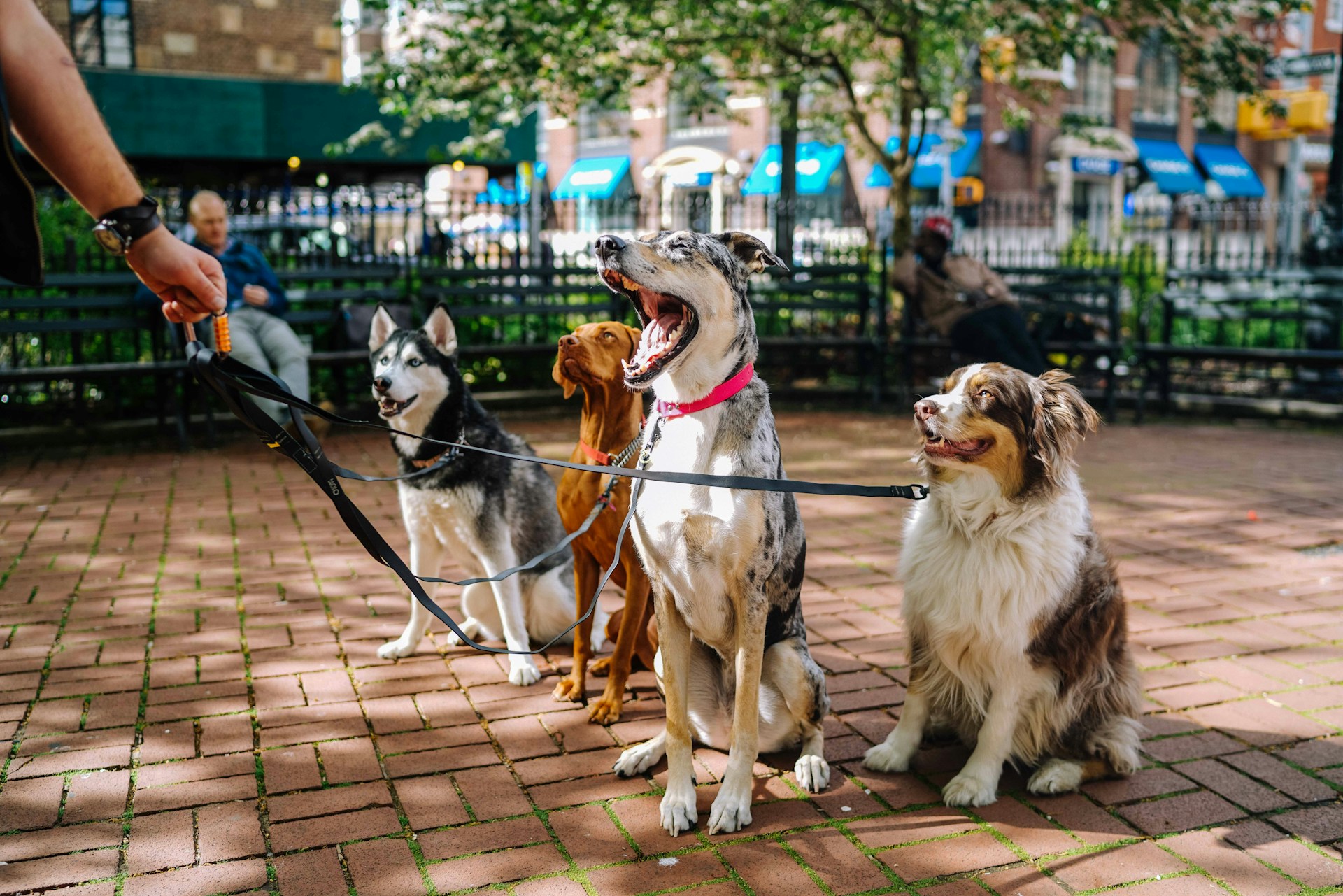
Solo vs. Group Walks can make a meaningful difference in your bill. Group walks (typically 2-4 dogs) cost 20-30% less because the walker splits time costs across multiple clients. If your dog is social and comfortable around other dogs, this is an easy way to save. If your dog is reactive, anxious, or has recall issues, stick with solo walks -- they'll get more out of it.
Frequency and Packages are where the real savings live. Walkers prefer guaranteed, recurring income over one-off bookings, and they pass that preference along as a 15-20% discount on packages. Beyond the price break, your dog benefits from a consistent routine -- same walker, same time, same route.
Special Needs add $5-15 per walk. If your dog needs medication administered, has mobility limitations, or requires an experienced handler for reactivity, you're paying for specialized skill. Walkers who do this well have invested real time learning how.
Holiday, Weekend, and Off-Peak Rates follow supply and demand. Holiday walks carry a 25-50% premium because the walker is giving up their own time off. Early morning and late evening walks cost more because they fragment the walker's schedule. Midday walks (10am-3pm) are typically the cheapest slot -- walkers can batch multiple clients in that window.
The Chicago Factor: Weather and Your Dog Walker
Chicago weather creates real logistical wrinkles for dog walking, especially between November and March.
Most professional walkers will walk in light rain and temperatures down to about 10-15 degrees Fahrenheit. Below that, walks get shorter -- 5-10 minute potty breaks or indoor alternatives. Some walkers add a $5-10 surcharge for extreme weather because the walk takes longer (bundling up, paw checks, slower movement). That's reasonable.
Road salt is the other winter consideration. Salt and de-icing chemicals can burn your dog's paw pads, and dogs that lick their paws afterward can get an upset stomach. A good walker either avoids heavily salted stretches, wipes paws after the walk, or uses booties. Ask whether paw protection is included in the base rate or is an add-on so you're not surprised in February.
Three questions worth asking any potential walker: What's your temperature cutoff for outdoor walks? Do you charge extra in extreme weather? How do you handle paw protection from salt? Specific answers signal a walker who's done Chicago winters before.
Comparing Your Dog Walking Options
Here's an honest look at what each type of dog walking service costs and what you get:
| Service Type | Avg Cost (30 min) | What You Get |
|---|---|---|
| Neighborhood Teen/Hobbyist | $15 - $25 | Cheapest rate; personal relationship; no insurance or backup coverage |
| On-Demand Apps (Rover/Wag) | $20 - $40 | Fast booking; GPS tracking; some vetting; walker may vary each visit |
| Professional Companies | $30 - $50 | Trained staff; reliable scheduling; insurance; less flexibility in choosing your walker |
| Tails (Local Network) | $25 - $35 | Background-checked; insured; same dedicated walker; Chicago-specific knowledge |
The biggest differentiator between these options isn't price -- it's consistency. A walker who knows your dog, your building, and your neighborhood delivers better walks over time. That's true regardless of which service type you choose.
Understanding the True Value of Professional Dog Walking
When you're looking at $500-700 a month, it helps to think about what those walks actually do for your dog.
Physical exercise keeps weight in check. Canine obesity shortens lifespan by up to two years and leads to joint problems and diabetes -- regular walks are the simplest prevention.
Mental stimulation happens through sniffing. That's how dogs process their world, and a walk that lets your dog explore with their nose is genuinely enriching, not just a bathroom trip.
Routine matters to dogs. A consistent schedule with a familiar walker reduces anxiety and makes your dog more relaxed at home, not less.
For pet parents working outside the home, there's also a practical reality: most adult dogs can comfortably hold their bladder for 6-8 hours. A standard workday plus commute often exceeds that. A midday walk keeps your dog comfortable and prevents the stress of holding it too long.
Tips for Getting the Best Value
You can lower your monthly costs without cutting corners on care. These strategies work because they benefit both you and your walker.
Book Packages Over Individual Walks. The 15-20% discount on packages reflects real value for walkers -- guaranteed recurring income is worth more to them than one-off bookings. Unless your schedule is genuinely unpredictable week to week, packages are the better deal.
Consider Group Walks if your dog enjoys other dogs. The 20-30% savings is meaningful over a month, and social dogs often get more out of a group walk than a solo one. Keep group sizes at 3-4 dogs for adequate supervision.
Be Flexible With Timing. Midday walks (10am-3pm) are the cheapest window because walkers can batch multiple clients efficiently. Early morning and late evening cost more because they break up the walker's schedule. If your dog doesn't care about the exact time -- and most don't -- midday is the value play.
Build a Relationship With One Walker. A walker who knows your dog reads their body language, anticipates reactions, and prevents problems before they start. Long-term walkers often offer loyalty perks like flexibility on cancellations, priority holiday scheduling, and steady rates.
Ask About Trial Walks. A meet-and-greet before committing tells you whether your dog is comfortable with this person. Watch for relaxed posture and willing approach -- or stress signals like whale eye, a tucked tail, and hiding behind you. A good match makes every walk better; a poor match wastes money.
How Much Should You Budget Monthly?
What to Budget in Chicago
2026 monthly rates for 30-minute walks. Packages save 15–20% over individual bookings.
Occasional
2–3 Walks per Week
For hybrid schedules—you walk your dog on WFH days, a pro covers the rest.
$200–$420
per month8–12 walks · ~$25–35/walk
Most Common
Once Daily, Weekdays
The minimum for full-time workers. Keeps bladder capacity in check and prevents destructive boredom.
Best value for most owners$500–$770
per month20–22 walks · ~$25–35/walk
Premium
Twice Daily, Weekdays
For puppies under 6 months, seniors with incontinence, or high-energy breeds that need two sessions.
$1,000–$1,540
per month40–44 walks · ~$25–35/walk
Compare to the alternative: behavioral training for separation anxiety costs $500–$2,000. Regular walks are prevention, not luxury.
Here are the monthly numbers for Chicago in 2026 so you can plan ahead:
Once-daily weekday service (5 walks/week, 30 minutes each): $500-700/month. This covers most full-time working pet parents and keeps your dog exercised and comfortable during the workday.
Twice-daily weekday service: $900-1,200/month. Necessary for puppies under 6 months (they can hold it roughly one hour per month of age), senior dogs with incontinence, or dogs with certain medical conditions.
Occasional walking (2-3 times/week): $160-350/month. Works well for hybrid schedules where you're home some days and can walk your dog yourself.
| Budget Level | Frequency | Monthly Cost |
|---|---|---|
| Essential | 5x/week, 30 min | $500 - $700 |
| Full coverage | 2x/day, 5 days | $900 - $1,200 |
| Supplemental | 2-3x/week | $160 - $350 |
Package discounts, group walk rates, and midday scheduling can each shave 15-30% off these numbers -- and they stack. A midday group walk package is the most budget-friendly option for a social dog.
Finding the Right Dog Walker on Tails
On Tails, you create a profile with your dog's personality, needs, and schedule. The platform matches you with walkers based on actual fit -- experience with your breed type, comfort with your dog's temperament, and availability in your neighborhood. Every walker is background-checked and carries liability insurance, and Tails' total platform fee is 15%, which is transparent and built into the listed rate.
After the match, you'll do a meet-and-greet to make sure it's a good fit for your dog. Once you're set, you can book recurring walks or on-demand. After each walk, you get GPS-tracked routes, photos, and notes about how it went.
Dog Walking Prices by Chicago Neighborhood
Prices vary across Chicago because of three logistical factors: parking difficulty, building access complexity, and local demand. Here's what to expect:
| Neighborhood | Typical Range (30 min) | Why This Price |
|---|---|---|
| Lincoln Park / Lakeview | $25 - $40 | Street parking costs $2-4/hour or takes 10-15 minutes to find. High-rise lobbies and elevators add time per visit. High demand lets walkers be selective. |
| Wicker Park / Bucktown | $25 - $35 | Mixed parking -- free on residential streets, paid on commercial stretches. Strong demand from young professionals. |
| Logan Square | $25 - $32 | More single-family homes and two-flats with easy access. Growing demand, but rates haven't caught up to denser neighborhoods yet. Currently a value sweet spot. |
| West Loop / Fulton Market | $25 - $38 | High weekday demand from urban professionals. Condo buildings require key fobs and doorman coordination. Parking is expensive or nonexistent. |
| Hyde Park / South Loop | $25 - $30 | Hyde Park has easier parking and more residential access. South Loop high-rises mirror West Loop logistics but with less demand pressure. Price-sensitive academic community keeps rates competitive. |
The practical takeaway: neighborhoods with residential parking and low-rise buildings run 15-25% cheaper for equivalent service quality. If you're in a high-rise area, the premium covers real time and access costs your walker incurs on every visit.
The Bottom Line on Dog Walking Costs
Dog walking in Chicago runs $25-35 per 30-minute walk in 2026, or $500-700 monthly for daily weekday service. Packages, group walks, and midday scheduling are the three best levers for bringing that number down. What you pay should match what you need: a reliable, consistent walker who knows your dog and your neighborhood.
Find walkers in your price range on Tails.
Frequently Asked Questions
How do dog walkers get into my home?
Three secure methods work for most situations. A lockbox (combination-secured box holding a spare key) is the most common -- it's cheap, reliable, and the code can be changed if you switch walkers. A smart lock with temporary codes is more secure because you can issue time-limited access and see entry logs. Doorman/building access requires coordinating with your building but adds a layer of verification. Avoid hidden spare keys -- if your walker knows where it is, so might others. On Tails, access instructions are shared through the app (encrypted, not visible to anyone else), and you should confirm logistics during the meet-and-greet so there's no fumbling on the first walk.
What's the cancellation policy for dog walking?
Tails uses a tiered policy that reflects real economic impact on walkers: 24+ hours before = full refund (walker can rebook the slot). 12-24 hours before = 75% refund (harder to fill, but possible). 2-12 hours before = 50% refund (slot likely stays empty). Less than 2 hours = no refund (walker turned down other clients for your slot and can't recover that income). Rescheduling through the app is always free if you give adequate notice.
How much should I tip my dog walker?
Tipping isn't required, but 15-20% is standard for service you're happy with. Walkers who feel appreciated tend to offer priority scheduling, flexibility, and above-and-beyond care. Holiday bonuses of $50-100 are common for walkers who've built a relationship with your dog over the year. Tails makes tipping easy through the app after any walk.
Are dog walking packages worth it compared to paying per walk?
Yes, unless your schedule is genuinely unpredictable. Packages save 15-20% because walkers prefer guaranteed income over uncertain bookings. Beyond the savings, packages give your dog a consistent routine -- same time, same walker -- which most dogs thrive on.
What's included in the cost of a dog walk?
Standard walks include: home pickup, the walk itself, waste cleanup, fresh water upon return, and a post-walk summary with photos. What's typically NOT included (and costs extra if offered): medication administration, training reinforcement, extended playtime beyond the walk, or handling multiple dogs from the same household. On Tails, each walker specifies exactly what's included in their base rate.
Is it cheaper to hire an independent walker or use a service like Tails?
Independent walkers charge $5-10 less per walk on average. The tradeoff is that you're generally giving up background checks, insurance coverage, backup walker availability, and a support system if something goes sideways. The small premium for a platform like Tails covers vetting, liability insurance, and customer support.
How do I know if I'm paying too much for dog walking?
In Chicago, paying over $40 for a standard 30-minute walk without add-ons suggests you're above market -- unless the walker has specialized skills you specifically need (reactive dog handling, medical care, certified training). The better question: Is your dog happy? Is the walker reliable? Do you get updates? A $35 walker your dog loves and who never cancels delivers more value than a $25 walker who's inconsistent.