How to Find a Dog Walker You Can Trust (Without the Guesswork)
Look beyond background checks when hiring a dog walker—verify they have experience with your dog's specific needs (reactivity, senior mobility, breed-specific handling), know your neighborhood's hazards, and can articulate emergency protocols. Always do an in-person meet-and-greet where you watch them handle your dog.
You need a dog walker. Maybe you're back in the office after years of remote work. Maybe your schedule shifted, your dog's energy levels are through the roof, or you're just exhausted from trying to squeeze in midday walks between meetings. Whatever the reason, you've decided to hire help—and now you're staring at an overwhelming problem.
Where do you even start?
You could download a gig app and scroll through 200 profiles, each with a smiling photo and reviews that say "great!" without explaining why. You could ask your neighbors, post on Nextdoor, and hope someone trustworthy responds. Or you could spend your evenings becoming an amateur background checker, interviewing strangers about their emergency protocols while your dog waits by the door, still needing that walk.
Here's the uncomfortable truth: most pet care platforms make you do all the work. They verify that someone has a valid ID and a clean criminal record, call it "vetted," and leave you to figure out the rest. That model puts the entire burden of due diligence on you—the already-overwhelmed pet parent who just wants reliable help.
This guide will help you understand what actually matters when finding a dog walker, what "vetted" should really mean, and whether you want to do this research yourself or let someone else handle the heavy lifting.

Why "Verified" Doesn't Mean What You Think
Most apps define "vetted" as verified identity. They confirm someone is who they say they are, run a basic background check, and give them a green checkmark. That's important—but it tells you almost nothing about their actual ability to walk your dog safely.
A background check doesn't tell you:
- If they can handle a leash-reactive dog who lunges at triggers—or if they'll just hold tight and flood your dog into a meltdown
- If they know that brachycephalic breeds like Bulldogs and Pugs overheat at 75°F when humid, not just "when it's hot"
- If they understand that a senior dog with hip dysplasia needs 15-minute strolls on flat terrain, not 45-minute adventures
- If they'll recognize whale eye (the stress signal where you see the whites of the eyes) versus normal sniffing behavior
- If they've ever dealt with a dog fight, a slip-lead failure, or a dog choking on something they grabbed off the sidewalk
You can pass a background check and still be terrible at walking dogs. You can be a wonderful person who loves animals and still lack the experience to handle the unexpected.
When platforms don't distinguish between verified identity and verified skills, you're gambling. Sometimes you get lucky. Sometimes you don't—and the consequences range from a missed walk to a lost dog to an emergency vet visit that could have been prevented.
What Actually Matters in a Dog Walker
Beyond basic vetting, here's what separates a reliable walker from someone who's just "willing to try":
Experience With Dogs Like Yours
A great walker for a calm Cavalier King Charles Spaniel might be a disaster with your high-energy Vizsla. Breed matters. Size matters. Age matters. Behavioral quirks matter even more.
If your dog pulls like a freight train, you need someone with leash handling experience who uses proper equipment—a front-clip harness (like the Freedom Harness or Balance Harness) or a head halter (Gentle Leader, Halti)—not someone who'll let them drag them down the sidewalk on a flat collar.
If your dog is fearful of strangers or other dogs, you need someone who understands threshold training: keeping your dog far enough from triggers that they can still think, then using counter-conditioning (pairing scary things with high-value treats) to build positive associations. The "Look at That" game—rewarding your dog for calmly noticing a trigger instead of reacting—is a specific technique experienced handlers know.
Knowledge of Canine Body Language
Professional walkers read dogs. They notice when a tail wag means "I'm excited" versus "I'm nervous" (slow, low wags with tense body = stress). They recognize lip licking, yawning, and shake-offs as calming signals that indicate a dog needs space. They see hackling (raised fur along the spine) and know the difference between arousal and aggression.
Most importantly, they understand trigger stacking—the cumulative stress effect where three minor stressors (a loud truck, a passing dog, a strange smell) combine to push a dog over threshold. A skilled walker notices when the stack is building and adjusts the route before a reaction happens.
This isn't something you learn from watching YouTube videos. It comes from hundreds of hours with different dogs in different situations.
Route Safety Awareness
Experienced walkers think several steps ahead. They know which streets have aggressive off-leash dogs in unfenced yards. They avoid construction zones with loud noises. They recognize when pavement is too hot for paw pads—above 85°F air temperature, asphalt can reach 130°F+, hot enough to burn in 60 seconds.
In Chicago specifically, a good walker knows:
- The Hawk (that brutal lake-effect wind) hits hardest on east-west streets. In January, plan north-south routes to avoid the worst wind chill.
- Wiggly Field in Lincoln Park is packed at lunch; Churchill Field has separate small/large dog areas but limited shade.
- The 606 Trail is great for exercise but terrible for reactive dogs—bikes approach fast and silently from behind.
- Montrose Dog Beach requires dogs to be under voice control and is closed 10pm-6am; violations are $500 fines.
- Winter salt (calcium chloride and magnesium chloride) causes chemical burns on paw pads. Apply Musher's Secret paw wax 10 minutes before leaving—not at the door, it needs to absorb. Wipe paws within 10 minutes of returning home, or use booties (Pawz rubber booties work well on city sidewalks).
- The Lakefront Trail has serious bike traffic; dogs should be on the pedestrian path, not the bike lane.
Clear Communication
The best walkers don't just show up and disappear. They provide updates—a photo, a note about how the walk went, anything unusual they observed. Professional apps like Time to Pet or Scout provide GPS tracking so you can see the actual route walked.
They tell you specifics: "She pulled hard toward a squirrel at Oak and Clark but redirected well with treats." "He seemed stiff getting up today—might be worth mentioning to your vet." "We cut the walk short because the pavement was too hot."
This communication isn't just nice to have. It's how you stay connected to your dog's daily life when you can't be there yourself—and how you catch early warning signs of health issues.
Red Flags That Should Stop Your Search
Not everyone advertising dog walking services is equipped to do it well. Watch for these warning signs:
🚩 Walk away from any walker who:
- Won't do a meet-and-greet before the first walk ("just give me the key and I'll handle it")
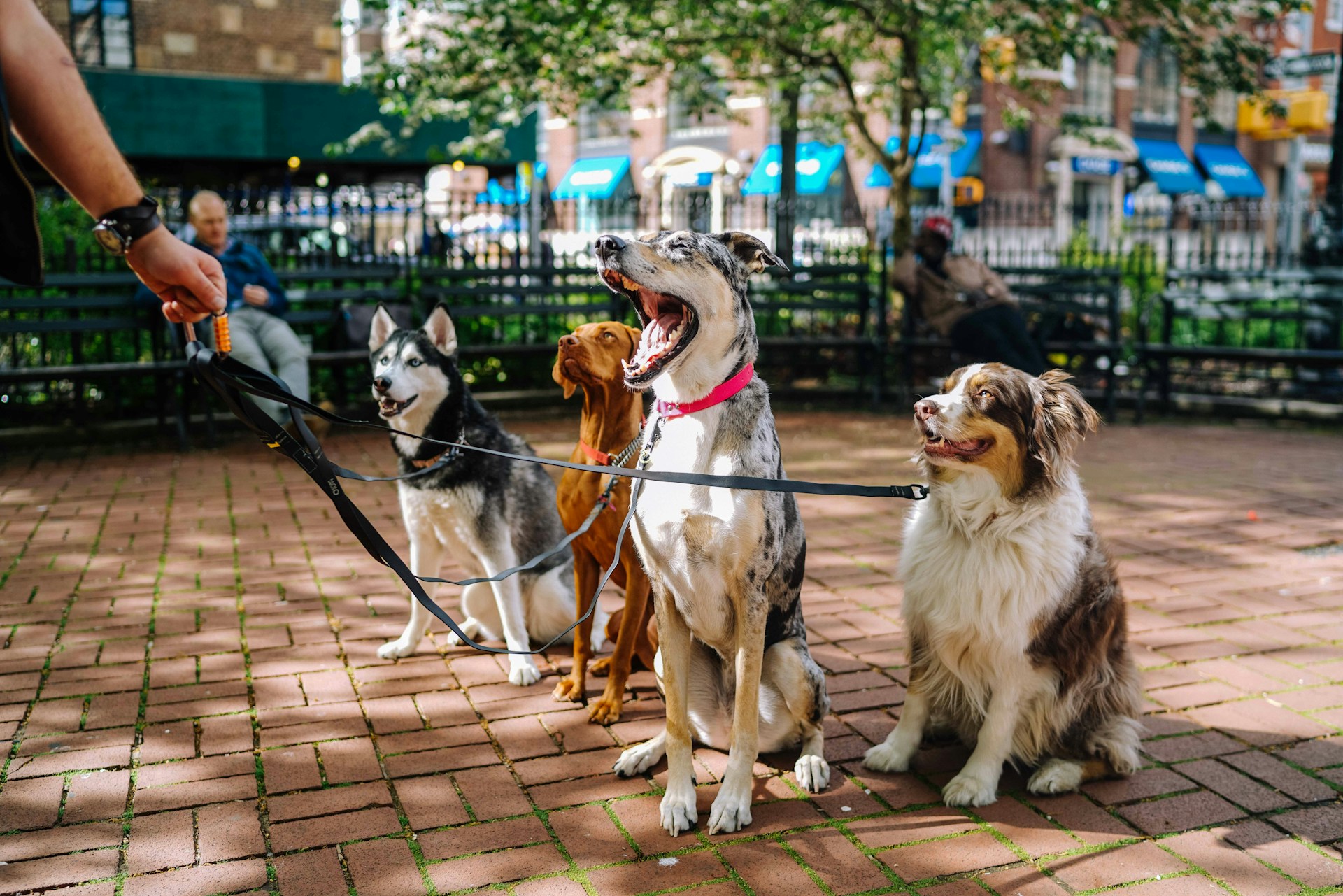
- Walks more than 4-5 dogs at once (large "pack walks" reduce individual attention significantly—one handler can't manage six dogs if one reacts)
- Can't explain their emergency protocols (what happens if your dog gets loose? Gets hurt? Gets into a fight? Eats something toxic?)
- Doesn't know your neighborhood (can't name nearby parks, doesn't know high-traffic times, unfamiliar with building access)
- Uses only flat collars or retractable leashes (retractables are dangerous in urban environments—they don't provide control and the cord can cause injuries)
- Seems uninterested in your dog's specifics (doesn't ask about reactivity, fears, medical conditions, or behavioral history)
- Has no references or reviews from verifiable clients
- Charges significantly below market rates ($15 for a 30-minute walk in Chicago means cut corners—quality care costs $22-35)
- Uses personal Venmo/Cashapp instead of a professional platform (no accountability, no insurance, no paper trail if something goes wrong)
The Meet-and-Greet Is Non-Negotiable
Never hire a dog walker without meeting them in person first—with your dog present. This is where you evaluate:
The walker's demeanor: Do they get down to your dog's level? Ask questions about routine, preferences, fears? Or do they seem rushed, distracted, checking their phone? A good walker spends the first 5-10 minutes just letting your dog approach them, not forcing interaction.
Your dog's reaction: Does your pup warm up to them, or hide behind you? Watch for soft body language—wiggly body, relaxed mouth, play bows. If your dog shows avoidance behaviors (turning away, lip licking, yawning) after 10+ minutes, pay attention. Dogs are remarkably intuitive about people.
Their handling skills: Ask them to take the leash and walk a short distance. Watch how they hold it (two hands, short enough for control but not tight). Do they position themselves between your dog and the street? How do they respond when your dog pulls or gets distracted?
Their questions: A good walker wants details:
- What's your usual walking route? Any places to avoid?
- How does your dog react to other dogs? Bikes? Skateboards? Strangers?
- Any medical issues I should know about? Medications?
- What do I do if something goes wrong—who's your emergency vet?
- How do you prefer I enter the building? (Lockbox code? Doorman? Key under mat?)
If they're not asking, they're not preparing.
A walker who wants to skip the meet-and-greet is a red flag. Professionals know they need that information to provide good care. Skipping it means they're either overconfident, inexperienced, or not invested in doing the job right.
The DIY Vetting Checklist
If you're doing your own research, here's what to verify before hiring:
| Category | What to Check | Why It Matters |
|---|---|---|
| Identity | Valid ID, address, phone | Basic accountability |
| Background | Criminal background check (ask if they've completed one through Care.com, Checkr, or similar) | Safety baseline |
| Insurance | Liability insurance ($1M minimum) and bonding | Protects you if your dog bites someone or the walker damages property |
| Experience | Years walking professionally, breeds handled, specific skills (reactivity, senior dogs, medication administration) | Capability beyond willingness |
| References | Contact info for 2-3 current clients (not just friends/family) | Verify claims independently |
| Equipment | What harness/leash do they use? Do they carry treats, water, waste bags, a slip lead backup? | Professional preparedness |
| Emergency Plan | Which emergency vet would they go to? Do they have transportation? At what point do they call you vs. act independently? | Worst-case preparedness |
| Communication | How will they update you? App? Text? What's their response time for messages? | Stay connected to your dog |
This is a lot of work. If you're thinking "I don't have time for this"—you're not alone.
The Difference Between a Directory and a Matchmaker
Most pet care apps work like Craigslist with better branding: they hand you a list of everyone who signed up and expect you to figure out who's actually good. You read reviews (half of which say "great!" with no detail), compare rates, and hope for the best.
That model puts all the work—and all the risk—on you.
Tails works differently. We're not a directory. We're a matchmaker.
We verify skills, not just IDs. Every Tails walker completes in-person interviews with our team. They demonstrate at least one year of professional pet care experience. But we go further: we track what each walker excels at. Who's experienced with leash reactivity and knows threshold protocols? Who handles senior dogs with arthritis or IVDD with appropriate pace and terrain? Who's confident with high-energy breeds like Border Collies and Huskies that need serious mental stimulation, not just miles? Who can administer insulin or subcutaneous fluids? We know—because we've verified it.
We curate, so you don't have to scroll. When you tell us about your dog—their age, energy level, behavioral quirks, medical needs—our matching system cross-references that with our walkers' verified skill sets. Instead of 200 profiles, you get a shortlist of walkers who have a proven track record with dogs like yours.
We interview, so you don't have to guess. Our team has already asked the hard questions about emergency protocols, handling experience, and Chicago route knowledge. You still do the meet-and-greet (we insist on it), but you're meeting pre-qualified candidates—not random profiles.
The result? You spend 20 minutes choosing from 3 great options instead of 3 hours sorting through 30 unknowns.
Chicago-Specific Considerations
Finding a dog walker in Chicago comes with unique challenges:
Weather Preparedness
Chicago weather doesn't care about your walk schedule. A reliable walker knows:
- Below 20°F (-6°C): Frostbite risk begins for short-coated breeds (Boxers, Pitbulls, Greyhounds). Walks should be 10-15 minutes max. Watch for lifting paws, shivering, or reluctance to move.
- Below 0°F with wind chill: Skip the walk entirely for most dogs. A quick potty break in a sheltered area is enough.
- Above 85°F: Pavement burns. Do the 7-second test—if you can't hold your hand on the asphalt for 7 seconds, it's too hot for paws. Walk early morning or after 7pm.
- Humid summer days: Brachycephalic breeds (Bulldogs, Pugs, Boston Terriers, Frenchies) overheat dangerously fast. Watch for excessive panting (30+ breaths per minute), bright red or purple gums, or glazed eyes. This is a veterinary emergency.
- The Hawk: That brutal January wind makes 15°F feel like -10°F. East-west streets are wind tunnels. North-south routes with building cover are safer.
Paw Protection Protocol: Apply Musher's Secret paw wax 10 minutes before leaving (it needs time to absorb). After winter walks, wipe paws with a damp cloth within 10 minutes to remove salt and de-icers. For extended cold-weather walks, Pawz rubber booties or Ruffwear Polar Trex boots provide full protection.
Neighborhood Knowledge
Tails walkers are located throughout Chicago, including:
- Lincoln Park and Lakeview (North Side) — Wiggly Field, the lakefront, lots of dog traffic
- Wicker Park and Logan Square (Near Northwest) — Crowded patios, narrow sidewalks, Churchill Field Dog Park
- West Loop and South Loop (Central) — High-rise buildings, limited green space, Mary Bartelme Park
- Andersonville and Edgewater — Quieter streets, Foster Beach Dog Friendly Area, Berger Park
- Rogers Park and Uptown — Loyola Beach, diverse neighborhoods
A walker who knows your neighborhood knows:
- Which parks are packed at noon (Wiggly Field, Churchill) vs. quieter options
- Which streets have aggressive dogs behind fences
- Which buildings have strict pet policies or difficult access
- The best combination of shade, grass, and bathroom spots for your specific route
Building Access
Many Chicago dogs live in apartments and condos. An experienced walker understands:
- Lockbox and keypad protocols — Professional walkers use KeySafe or Master Lock boxes; they memorize codes rather than writing them down
- Doorman procedures — Some buildings require 24-hour advance notice for new visitors; your walker should know this
- Elevator etiquette — Position yourself between your dog and other passengers. For reactive dogs, wait for an empty elevator rather than forcing a close encounter.
- The 5-minute elevator wait — In high-rises, factor in 5-10 minutes just for elevator time, especially for puppies who can't hold it
How to Start Your Search
Whether you do the work yourself or use a matching service, begin by writing down:
- Your dog's basics: Age, breed, size, energy level, typical daily routine
- Behavioral considerations: Reactivity triggers, fears (thunderstorms? bikes? men in hats?), threshold distance for other dogs
- Medical needs: Medications (name, dosage, timing), mobility issues (hip dysplasia, IVDD, arthritis), conditions to monitor
- Schedule requirements: Days, times, preferred duration, flexibility needed
- Non-negotiables: Solo walks only? Must avoid certain streets? Needs a walker who can handle 70+ lb pullers?
This profile becomes your filter. Every potential walker should be evaluated against these specifics—not just their smiling profile photo.
Making Your Decision
Whether you vet walkers yourself or let Tails do the heavy lifting, the goal is the same: finding someone who will care for your dog with competence and attention.
If you go the DIY route, use this guide as your checklist. Verify credentials, ask hard questions, trust your dog's reaction during the meet-and-greet, and don't settle for "probably fine."
If the thought of becoming an amateur HR department sounds exhausting, that's exactly why we built Tails. We do the vetting, interviewing, and matching so you can focus on what matters: finding a great walker for your pup without the research project.
Ready to skip the scrolling? Find your dog walker on Tails and see your curated matches today.
Frequently Asked Questions
How much do dog walkers cost in Chicago? Individual walks typically range from $22-35 for a 30-minute walk, depending on the walker's experience, your location, and your dog's needs. Dogs requiring special handling (reactivity management, medication administration, senior mobility support) may cost $5-10 more per walk. Tails walkers keep 90% of what you pay—no hidden platform fees eating into their earnings or inflating your costs.
How many dogs should a walker handle at once? For individual attention and safety, 3-4 dogs maximum is ideal for group walks—and only if all dogs are carefully matched for temperament and energy. Large "pack walks" of 6+ dogs make it nearly impossible to give each dog proper attention or respond effectively to emergencies. For reactive dogs, senior dogs, puppies under 6 months, or dogs with medical needs, solo walks only.
What should I provide for my dog walker? Clear written instructions covering: feeding schedule (if applicable), bathroom habits and preferred spots, behavioral notes (triggers, fears, how to redirect), and emergency contacts. Access method (keys, lockbox code—KeySafe or Master Lock recommended—or doorman instructions). Any medications in original bottles with dosing instructions written out. A backup leash and front-clip harness in case of equipment failure. For anxious dogs, a Thundershirt or familiar blanket can help.
How long should dog walks be? Most adult dogs do well with 30-minute walks. High-energy breeds (Border Collies, Huskies, Vizslas) may need 45-60 minutes or a more vigorous pace. Puppies under 6 months should follow the "5 minutes per month of age" rule—a 4-month-old puppy needs 20 minutes max. Senior dogs, especially those with hip dysplasia or arthritis, often do better with two 15-minute strolls than one 30-minute trek. Your walker should adjust pace and duration based on your dog's specific needs—not a one-size-fits-all approach.
What if my dog doesn't like the walker? This happens sometimes, and it's okay. A good walker will recognize it too and communicate honestly. If your dog shows consistent avoidance behaviors (turning away, hiding, refusing to engage) after 2-3 walks, it's worth trying a different match. Chemistry matters—for dogs and humans alike. The 3-3-3 rule for adjustment (3 days to decompress, 3 weeks to learn routine, 3 months to feel at home) applies more to rescue dogs in new homes than walker relationships—if your dog isn't warming up after a few sessions, trust that signal.
Finding Care
Ready to take the next step?
Find Trusted CareFind Trusted Pet Care in Chicago
Join thousands of pet parents who trust Tails for professional boarding, walking, and daycare services.
Get Started with Tails