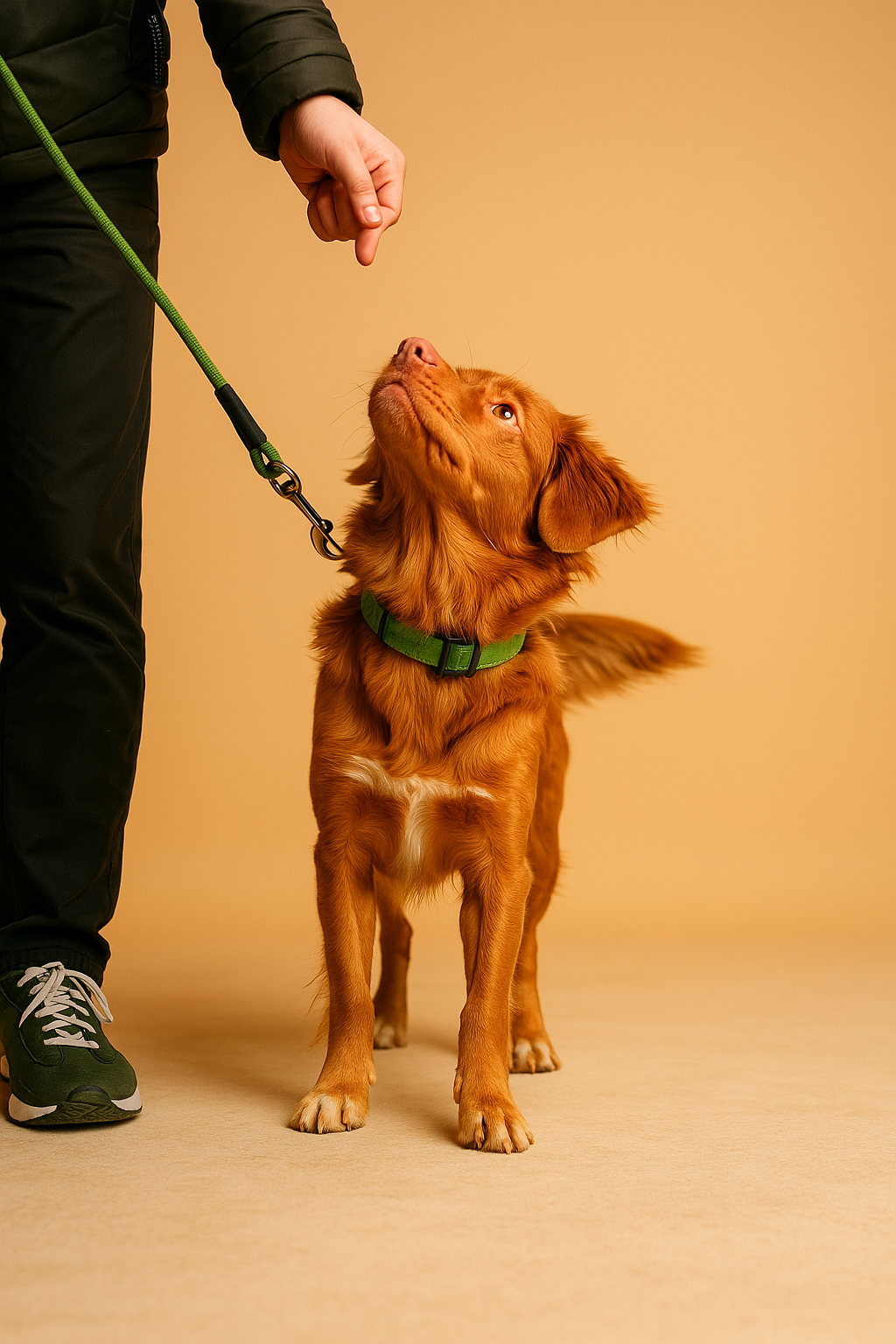
The best GPS dog collar depends on the job you need it to do. A GPS dog collar is best for escape recovery, boundary alerts, and finding a dog who is away from you. It is not automatically the best tool for daily walk proof, poop notes, family sharing, stamina trends, or coordinating care with a partner, walker, sitter, or roommate.
If your main worry is "Where is my dog right now?", compare Fi, Halo, Tractive, and Whistle below. If your main worry is "Did the walk happen, who did it, how far did they go, and did anything change with poop, stamina, or routine?", start with the Tails dog health tracker or the GPS dog tracking app instead.
This is a comparison guide, not a hands-on lab test. Product pricing, subscriptions, battery claims, and feature names change often, so confirm the current plan details before you buy.
Best GPS Dog Collar: Direct Answer
For most dog owners, Tractive is the best dog GPS tracker to compare first because it focuses on live GPS tracking, escape alerts, virtual fences, and a clip-on form factor. Fi is the best GPS dog collar if you want the tracker built into a polished smart collar with activity and sleep trends. Halo is the best GPS collar for dogs when wireless boundaries are the priority, especially if you are trying to create GPS fence zones without burying wire. Whistle is useful legacy research context, but new buyers should verify current availability, support, and replacement options before relying on older recommendations.
Use this rule:
- Choose Tractive for live location, escape alerts, and a clip-on tracker format.
- Choose Fi for an integrated collar, long battery expectations, and activity trends.
- Choose Halo for GPS fence-style boundaries and training workflows.
- Choose Tails when you do not need hardware and want daily walk proof, poop notes, stamina history, family sharing, and care coordination.
Track Walks and Care With Tails
Quick Comparison Table
| Option | Best For | Main Strength | Main Tradeoff |
|---|---|---|---|
| Tractive | Most owners comparing a dog GPS tracker | Live GPS, virtual fences, escape alerts, clip-on tracker format | Clip-on tracker, subscription required |
| Fi | Smart collar buyers | Integrated GPS dog collar with activity and sleep trends | Higher ongoing cost than simple app tracking |
| Halo | Wireless boundary training | GPS-based fences and correction/training flow | More training responsibility and higher setup complexity |
| Whistle | Existing Whistle owners | Legacy health and GPS tracker history | Verify current availability and support before relying on older reviews |
| Tails | Daily care tracking without hardware | Walk proof, poop notes, shared profiles, stamina trends | Not a live escape-recovery collar |
The important distinction: GPS collars are for location risk. Tails is for daily care history.
Best Picks by Use Case
| Your Priority | Best Starting Point | Why |
|---|---|---|
| Best GPS dog collar overall | Fi or Tractive | Fi if you want a full collar; Tractive if a tracker clipped to a collar is enough |
| Best dog GPS tracker for a clip-on format | Tractive | Strong live-location feature set without replacing the whole collar |
| Best GPS collar for dogs that escape | Tractive or Fi | Both focus on escape alerts and live recovery |
| Best GPS dog collar for boundaries | Halo | Boundary training is the core product, not an add-on |
| Best for daily walk proof | Tails | Tracks walks and care notes without requiring hardware |
| Best for family sharing and caregiver handoffs | Tails | Shared dog profiles keep walk, poop, and routine history together |
| Best for former Whistle shoppers | Compare current tracker options | Older Whistle reviews should be checked against current availability and support |
GPS Dog Collar vs Dog Walk Tracking App
A GPS dog collar and a dog walk tracking app sound similar, but they solve different problems.
| Question | GPS Dog Collar | Tails |
|---|---|---|
| Where is my dog right now? | Best fit | Not the main job |
| Did today's walk happen? | Sometimes | Best fit |
| Who walked the dog? | Limited | Best fit |
| How long was the walk? | Usually | Best fit |
| Did the dog poop? | Usually no | Best fit |
| Did stamina change over time? | Activity estimate | Walk history and care notes |
| Can my family share one care log? | Depends on subscription/app | Best fit |
| Do I need collar hardware? | Yes | No |
If you are deciding between hardware and an app, read the full GPS dog collar vs dog walk tracking app guide. The short version: buy GPS hardware when escape recovery matters; use Tails when daily care coordination is the real pain.
Fi: Best Integrated GPS Dog Collar
Fi is the best-known option for owners who want the tracker built into a real collar rather than clipped onto an existing collar. It is positioned as a smart dog collar, not just a tag-sized tracker.
Best for:
- Owners who want one collar instead of a clip-on device
- Dogs that may slip out of yards or doors
- People who like activity, sleep, and behavior trend data
- Owners who want a cleaner hardware experience than a removable tracker
Strengths:
- Integrated GPS dog collar design
- Escape alerts and live location tools
- Activity and sleep tracking
- Long battery expectations compared with many always-on trackers
- Strong fit for owners who want a polished consumer app experience
Tradeoffs:
- Subscription cost matters over the life of the collar
- Collar sizing and fit matter more than with a clip-on tracker
- Health and activity trends are not the same as a daily care log
- It will not automatically record poop quality, caregiver notes, or why a walk was shorter than usual
Fi is a strong pick if you want the best GPS dog collar in a classic "smart collar" format. If you are comparing Fi against similar tools, see the Fi collar alternatives, Fi vs Tractive, and Fi vs Halo guides.
Halo: Best GPS Dog Collar for Wireless Boundaries
Halo is different from Fi and Tractive because the core use case is not just finding your dog after an escape. Halo is built around GPS-based fences, boundary feedback, and training.
Best for:
- Owners who want wireless fence-style boundaries
- Rural, vacation, or large-yard environments where buried wire is impractical
- Dogs who can be trained reliably around boundary cues
- People who want containment workflows more than daily care logging
Strengths:
- GPS fence creation
- Boundary alerts and feedback
- Designed around training and containment
- Useful for properties where a physical fence is unavailable or incomplete
Tradeoffs:
- Boundary products require training, not just setup
- GPS precision can vary by terrain, buildings, trees, and signal conditions
- It is usually more complex than a simple location tracker
- It does not replace supervision, leash laws, or a secure physical fence for high-risk dogs
Halo is the best dog GPS collar to compare if your search intent is really "wireless fence" or "how do I keep my dog inside a boundary?" For alternatives, see the Halo collar alternatives and Fi vs Halo guides.
Tractive: Best Dog GPS Tracker for Most Buyers
Tractive is often the easiest first comparison for owners who want a GPS dog tracker without committing to a full smart collar ecosystem. It clips to a collar or harness and focuses on live tracking, virtual fences, escape alerts, activity, and health-style insights.
Best for:
- Owners who want live GPS tracking first
- Dogs who already have a collar or harness that fits well
- Families comparing GPS collar for dogs options by total cost
- People who want escape alerts without boundary-training complexity
Strengths:
- Live GPS tracking and virtual fences
- Escape alerts
- Collar-agnostic clip-on form factor
- Activity, sleep, and health-style monitoring features
- Multiple tracker sizes for different dogs
Tradeoffs:
- Still requires a subscription
- A clip-on tracker can be less elegant than an integrated collar
- Battery life depends heavily on live tracking use and power-saving zones
- It does not replace a shared walk and care log
Tractive is the best dog GPS tracker to compare first if your priority is practical escape recovery rather than a premium collar feel. For more detailed comparisons, see the Fi vs Tractive and Tractive GPS vs Fi and Halo guides.
Whistle: Legacy Research Context
Whistle used to be one of the main names in dog GPS tracker and pet health monitoring. For a new buyer, treat Whistle as legacy research context and verify current availability, support, and replacement options before relying on older review pages.
Best for:
- Existing Whistle owners figuring out what to do next
- Shoppers researching older dog GPS tracker reviews
- People comparing historical Whistle features against current Tractive options
Strengths:
- Strong legacy reputation in pet activity and GPS tracking
- Familiar name for owners who bought earlier pet wearables
- Helpful context when comparing older reviews
Tradeoffs:
- Not the cleanest new-purchase path unless current availability and support are clear
- Current support and migration details matter more than old reviews
- Most shoppers should compare current Fi, Halo, Tractive, and Tails options against their actual need
If you searched for Whistle because an older review called it the best GPS dog collar, treat that review as historical context. Compare current tracker options before buying.
Where Tails Fits
Tails is not trying to replace a GPS escape collar. That distinction matters.
Use a GPS collar when:
- Your dog bolts through doors.
- Your yard has escape risk.
- You travel with your dog.
- Your dog hikes off leash where allowed.
- You need alerts when your dog leaves a safe zone.
Use Tails when:
- You want proof that a walk happened.
- Multiple people share dog care.
- You want poop notes next to walk history.
- You are watching stamina, senior slowdown, or recovery.
- You need a single place for family, walkers, or sitters to coordinate.
- You do not want another collar, battery, charger, or subscription just to track walks.
For daily health and longevity tracking, start with the Tails dog health tracker. For location-oriented walk tracking without a collar purchase, use the Tails GPS dog tracking app.
Practical Buying Recommendations
If Your Dog Escapes
Buy GPS hardware. A phone-based app cannot help if your dog is away from the person carrying the phone.
Start with Tractive if you want the simplest tracker comparison. Choose Fi if you want the tracker built into the collar. Choose Halo if the escape problem is really a boundary problem and you are ready to train around GPS fences.
Then use Tails for the care layer: who walked the dog, whether the dog pooped, whether energy looked normal, and what changed before the escape risk increased.
If You Want a Wireless Fence
Start with Halo. That is its lane.
Be realistic about training. A GPS collar can provide cues and alerts, but it does not magically teach a dog a boundary. Dogs with prey drive, fear triggers, noise sensitivity, or escape history need careful supervision and training support.
If You Want Activity and Health Trends
Fi and Tractive both provide versions of activity and health-style tracking. That can be useful, but collar data is not the same as a care journal.
For health context, combine passive collar trends with active notes:
- Walk duration
- Route or distance
- Poop quality
- Appetite notes
- Energy level
- Limping or stiffness
- Medication or recovery context
- Who was responsible for care
That is where Tails dog health tracking fits best.
If You Just Want Walk Proof
Do not buy a GPS dog collar just to prove walks happened. Use a walk tracking app.
Tails lets you keep walks, routes, family sharing, and care notes in one profile without putting a cellular device on your dog. That is usually the cleaner setup when your dog is always with a person and you do not need escape recovery.
Download Tails for Walk Tracking
What to Check Before Buying Any GPS Collar for Dogs
Before you choose the best GPS dog collar, check these details:
| Factor | Why It Matters |
|---|---|
| Cellular coverage | Most GPS dog trackers need cellular service to report location |
| Subscription price | The real cost is hardware plus one to three years of service |
| Battery life | Live tracking drains faster than normal standby mode |
| Dog size and fit | A device that is too heavy or loose will not be used consistently |
| Waterproofing | Dogs swim, roll, and get caught in rain |
| Escape alert speed | Faster alerts matter more than pretty maps |
| Family sharing | More than one person may need access during an emergency |
| Boundary precision | GPS fences are not the same as physical fences |
| Data exports | Useful if you want longer-term records |
| Support and warranty | Important because this is safety hardware |
Do not compare only the sticker price. A "cheap" dog GPS collar can become expensive if the subscription is high, battery life is frustrating, or the app does not work well where you live.
Common Mistakes
Mistake 1: Buying GPS When You Need Coordination
If your problem is missed walks, unclear handoffs, or nobody knowing whether the dog pooped, a GPS dog tracker is overkill. Use Tails.
Mistake 2: Buying a Boundary Collar Without Training
Halo-style GPS boundaries are training systems. They require setup, practice, and judgment.
Mistake 3: Assuming Activity Data Explains Everything
A collar may show fewer steps or more rest. It may not explain whether your dog had diarrhea, skipped breakfast, limped after stairs, or took a shorter walk because the weather was hot. Add daily notes in Tails.
Mistake 4: Ignoring Subscription Cost
Most GPS dog collars require a paid plan. Compare the three-year cost, not just the first checkout price.
Mistake 5: Trusting Old Whistle Reviews
Whistle was an important brand, but current buyers should evaluate the current platform situation and compare Tractive directly.
FAQ
What is the best GPS dog collar?
The best GPS dog collar is Tractive for many owners who want live location and escape alerts, Fi for owners who want an integrated smart collar, and Halo for owners who need GPS-based wireless boundaries. The best choice depends on whether your main problem is escape recovery, daily tracking, or containment.
What is the best dog GPS tracker without a collar?
Tractive is the strongest starting point if you want a clip-on dog GPS tracker rather than a full collar. If you mean tracking walks without putting hardware on your dog, use Tails GPS dog tracking from the handler's phone.
Is a GPS dog collar worth it?
A GPS dog collar is worth it if your dog has real escape risk, spends time off leash where allowed, travels often, or uses a yard where a fast alert would change the outcome. It is usually not worth buying just for walk logs or family coordination.
Can I use Tails instead of a GPS collar?
Use Tails instead of a GPS collar when your dog is always with a person and you mainly need walk proof, poop notes, stamina trends, and shared care history. Do not rely on a phone-based app for escape recovery when the dog may be away from the phone.
Does a GPS collar replace a fence?
No. GPS collars can support alerts, recovery, and in some products boundary training, but they do not replace supervision, training, leash laws, or a secure physical fence for dogs with serious escape risk.
Which is better: Fi or Tractive?
Choose Fi if you want a polished smart collar. Choose Tractive if you want a practical clip-on tracker and lower upfront hardware cost. For a deeper comparison, see the Fi vs Tractive guide.
Which is better: Fi or Halo?
Choose Fi for smart collar tracking and activity trends. Choose Halo for wireless GPS boundary training. For a deeper comparison, see the Fi vs Halo guide.
Bottom Line
The best GPS dog collar is not one universal product. Tractive is the best first comparison for most live-tracking shoppers, Fi is the best fit for owners who want a full smart collar, Halo is the best fit for wireless boundaries, and Whistle is mostly a legacy research path for new buyers.
But GPS collars solve one category of problem: location risk. For daily dog health and longevity tracking, use Tails to log walks, poop notes, family handoffs, stamina trends, and care coordination without collar hardware. If you need both, use both: a GPS collar for escape recovery and Tails for the daily care record.