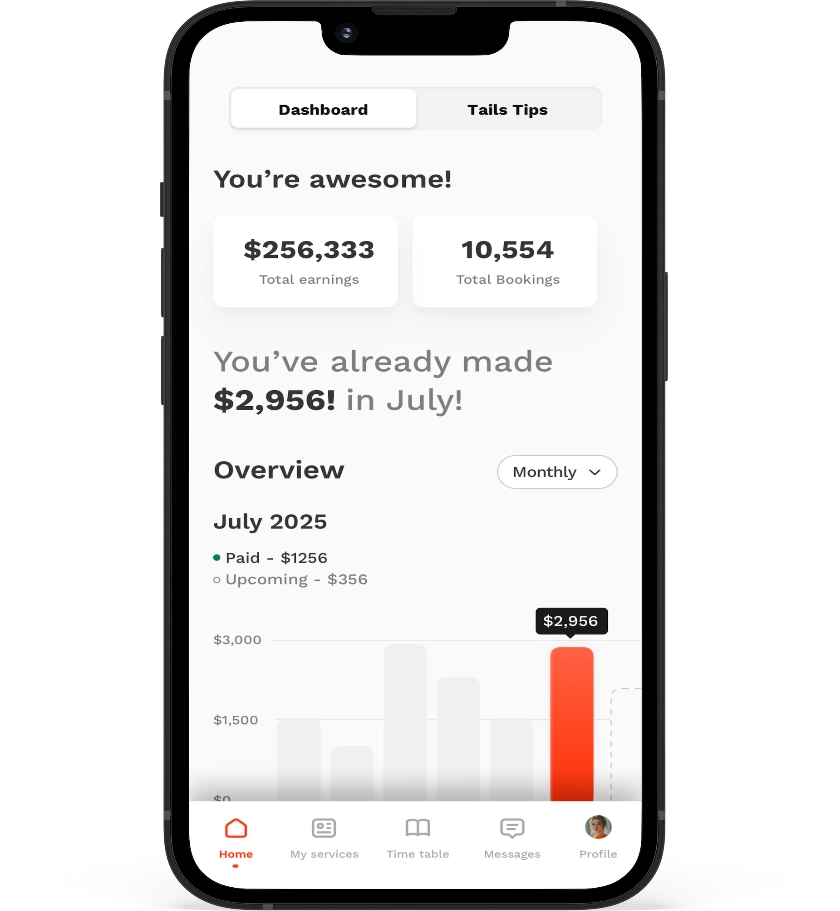
Recurring clients are the difference between "I got bookings this week" and "I have a dog walking business." One-off walks can fill gaps, but repeat clients create predictable income, cleaner routes, and stronger relationships with dogs and owners.
This guide is about schedule design. If you are still finding your first clients, start with how to get your first 10 dog walking clients. If you already have demand but your calendar feels chaotic, use this system.

Why Recurring Clients Change the Math
Two providers can charge the same rate and earn very different incomes.
| Provider | Calendar Pattern | Business Result |
|---|---|---|
| Scattered walker | Random one-off bookings across town | High unpaid travel time, unstable income |
| Route builder | Repeat clients in tight time blocks | Higher effective hourly rate and stronger retention |
The important metric is not only dollars per walk. It is dollars per route hour after travel, communication, keys, reports, and schedule gaps.
Protect Your Prime Windows
Most recurring dog walking demand clusters around mid-day work hours. If you fill those slots with low-value one-off walks, you may block the clients who would have booked every week.
Create a schedule map:
- Morning: puppy breaks, high-energy dogs, pre-work walks.
- Mid-day: recurring professional clients.
- Afternoon: flexible visits, senior dogs, second puppy breaks.
- Evening: occasional add-ons, not your primary recurring engine.
Then decide which windows are reserved for recurring clients only. Scarcity helps you avoid saying yes to bookings that weaken the business.
Build Routes, Not Just Bookings
A good recurring schedule has geographic logic. A bad schedule looks full but leaks time between every stop.
Route rules:
- Keep recurring clients within one tight zone whenever possible.
- Group apartment buildings and nearby blocks.
- Leave buffer time for elevators, weather, keys, and dog transitions.
- Avoid crossing town for a single walk unless the rate justifies it.
- Review your route monthly and trim low-efficiency bookings.
One 30-minute walk can consume 55 minutes if travel and access are messy. Route density is how you turn the same physical work into better income.
Use Trial Walks Before Recurring Commitments
Do not promise a recurring slot before you know the dog, home access, owner communication style, and route realities.
Use a trial walk to evaluate:
- Leash manners.
- Reactivity triggers.
- Building access.
- Equipment fit.
- Owner instruction clarity.
- Whether the dog recovers well after the walk.
- Whether the client respects timing and payment rules.
If the trial goes well, offer a specific weekly plan:
"Based on today, I can offer Tuesday/Thursday 12:00-2:00 recurring walks starting next week."
Specific beats vague. It helps the owner picture the routine and helps you protect your route.
Price Recurring Clients Carefully
Recurring clients are valuable because they reduce acquisition time and stabilize revenue. That does not mean they should receive unsustainable discounts.
Good recurring pricing:
- Rewards consistency without erasing margin.
- Charges for longer walks, add-ons, and extra dogs.
- Keeps cancellation rules clear.
- Avoids custom pricing for every client.
- Accounts for platform fees and taxes.
If you do offer a recurring rate, tie it to a commitment: weekly schedule, minimum number of walks, or consistent booking window. A "discount" with no commitment is just a lower rate.
For income modeling, read how much dog walkers make in Chicago.
Keep Clients With Operational Reliability
Retention is not complicated. It is execution.
Recurring clients stay when you:
- Arrive within the agreed window.
- Send consistent walk notes.
- Flag health or behavior changes early.
- Handle weather professionally.
- Remember dog-specific routines.
- Communicate schedule changes before they become problems.
- Avoid surprise fees or unclear policies.
The owner should feel that the walk is one less thing they have to manage.
Create a Renewal Rhythm
Do not wait until a client disappears to discuss the schedule. Build renewal into your operations.
At the end of each month, send a simple check-in:
"I am confirming June recurring slots this week. Do you want to keep Max on Monday/Wednesday/Friday mid-day?"
This does three things:
- It reminds the client that the slot is valuable.
- It gives you time to fill openings.
- It prevents casual recurring clients from drifting without notice.
For platform providers, use the platform's recurring booking tools when available. For direct clients, keep written confirmation.
Know When to Release a Client
Not every recurring client is good for the business. A client may need to be replaced if they:
- Regularly cancel inside your best window.
- Book too far outside your service area.
- Ignore safety instructions.
- Add unpaid tasks.
- Communicate disrespectfully.
- Have a dog outside your current skill level.
Releasing a client is not failure. It is schedule management. Your best clients deserve a business that is stable enough to keep showing up.
The Weekly Schedule Template
Use this as a starting point:
| Window | Best Use | Notes |
|---|---|---|
| 7:00-9:00 | Pre-work walks and puppy breaks | Good for high-energy dogs and early commuters |
| 10:30-2:30 | Core recurring route | Protect this for repeat clients |
| 2:30-4:30 | Flexible visits and second puppy breaks | Useful for add-ons and lower-pressure clients |
| 5:00-7:00 | Limited evening demand | Do not let this fragment your day unless rates support it |
Adjust for your city, transit, weather, and personal capacity. The principle is what matters: protect the blocks where repeat demand is strongest.
Build a Schedule That Can Survive Growth
The right recurring schedule makes growth calmer. You know which slots are open. Clients know what to expect. Dogs get consistency. Your income becomes easier to forecast.
Start small: three good recurring clients in one zone are better than six scattered bookings across town. Then add clients who improve the route rather than merely filling the calendar.
Ready to build recurring demand through a professional provider network? Apply to become a Tails Provider.
Frequently Asked Questions
How many recurring dog walking clients do I need?
It depends on rates, service length, route density, and whether clients book multiple days per week. A smaller number of high-consistency clients can be more valuable than many occasional clients.
Should I offer discounts for recurring dog walking?
Only if the client commits to a predictable schedule that improves your business. Avoid lowering rates for clients who still book inconsistently or cancel often.
How do I convert a trial walk into recurring service?
Send a specific offer after a successful walk: days, time window, start date, rate, and cancellation terms. Do not leave the next step vague.
What is the best dog walking schedule?
Most providers build around mid-day weekday demand, then add morning, afternoon, evening, sitting, or boarding services as needed. The best schedule is dense, repeatable, and realistic for your capacity.
What should I do when a recurring client keeps cancelling?
Enforce the cancellation policy, offer a different booking structure, or release the slot. A recurring slot has value only if it is actually used.